
We’re eager to bring your sound ideas to life!

E-mail Us Cary@SoundBrandingIdeas.com

w

Chat With Us Below
We're always here!

Call Us Today!
866-826-6692

Voiceover Scriptwriting & Delivery — Practical Best Practices for Memorable Brand Voiceovers

How you write and deliver a voiceover shapes listener perception and how well your message sticks. Clear scripts and intentional performances are the backbone of effective audio branding. This guide lays out practical, studio-ready techniques for writing conversational, brand-aligned voiceover copy and for directing performances that land with the right clarity, pace, and emotion. You’ll learn how to set objectives, structure scripts for different formats, estimate word counts and pacing, adapt language by genre and audience, apply vocal techniques, and collaborate efficiently with talent and engineers. Each section pairs concise steps, checklists, and micro‑scripts to help you produce voiceover copy that records cleanly and resonates with listeners. Tables compare script types, words‑per‑minute norms, and production roles to support planning and session prep.

How do you write a clear, engaging voiceover script?

A clear, engaging voiceover script begins with a single, audience-centered objective and language that reads naturally aloud. Writing for voice means favoring short sentences, active verbs, and conversational phrasing so the copy translates into believable delivery; that clarity improves listener attention and brand recall. Start by defining the listener and the core message, then map where the hook, explanation, and call to action fit inside the available runtime. Turn that outline into a read‑aloud draft, adding performance notes and timing cues to guide talent and engineers during the session.

Practical steps to draft a script that’s wired for the ear:

  • Define the audience and objective first so every line has purpose.
  • Write conversationally: short sentences, active verbs, natural contractions when appropriate.
  • Include parenthetical performance notes for pauses, emphasis, and tricky pronunciations.
  • Finish with a specific, time-bound call to action that suits the medium.

These steps prepare you to focus on core components and to structure copy for maximum impact across formats.

What are the key elements of an effective voiceover script?
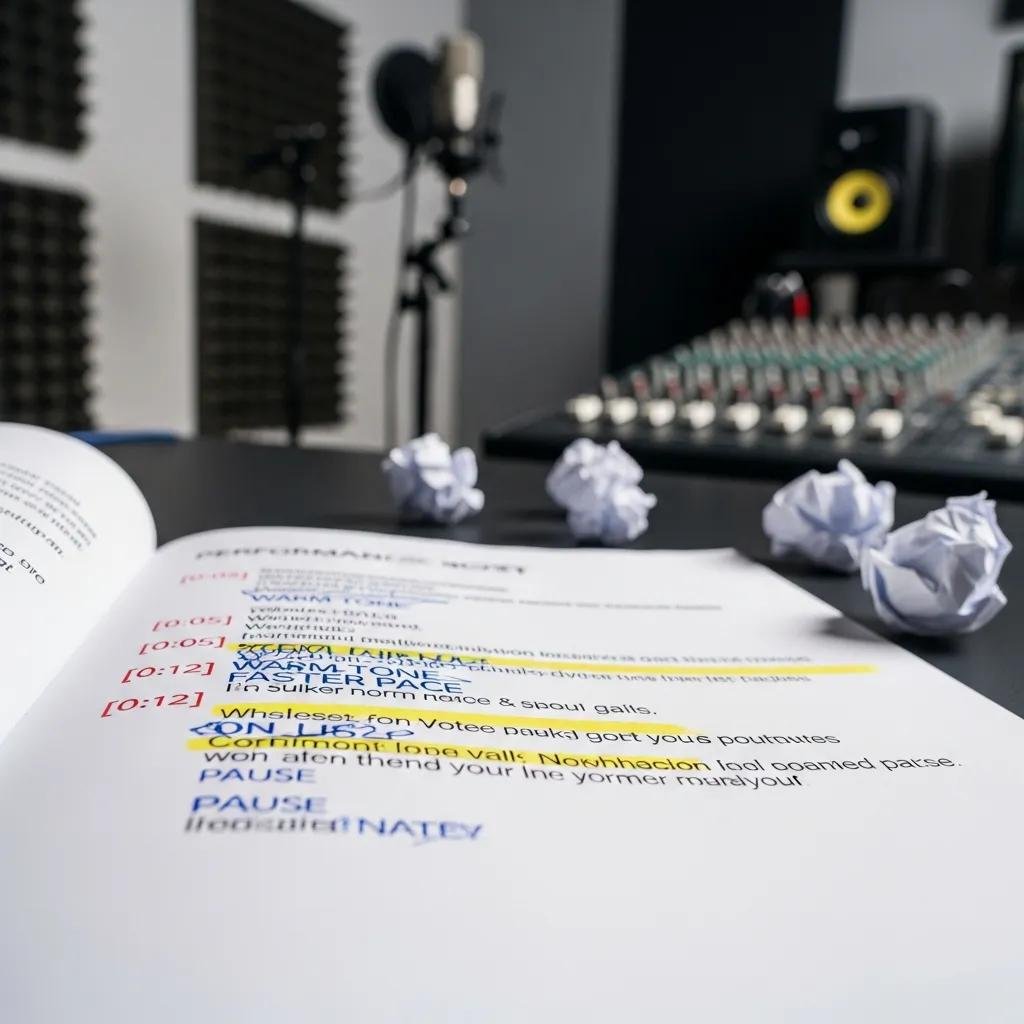
A production-ready voiceover script contains five essential elements that work together to communicate clearly and prompt action. First, an explicit objective—awareness, instruction, or conversion—keeps the script focused. Second, a defined target audience shapes tone, vocabulary, and reference points so the voice matches listener expectations. Third, a hook captures attention within the first three to five seconds. Fourth, performance notes and pacing markers tell talent where to breathe, pause, or stress a word. Finally, a clear, timeable call to action tells listeners exactly what to do next. Together, these elements create a compact script that guides both talent and engineers through the recording and post-production processes.

How to structure your voiceover script for maximum impact?

A reliable framework for most brand voiceovers is: Hook → Value/Body → Social Proof or Feature → Call to Action, with timing markers for each segment. Open with a one-line hook that piques curiosity or names a common problem, then deliver the key benefit in short, concrete sentences. Use transitions to move from the benefit to the supporting detail without breaking the flow, and close with an explicit CTA placed where the talent can emphasize it. Adapt the template by runtime: a 30‑second spot compresses the body into a single benefit line; a two‑minute explainer expands with sub‑points and examples. Labeling parts and timing help engineers and talent efficiently edit and package the best take.

Before we turn to pacing norms, compare how script types differ in tone, length, and CTA intensity to pick the right structure for each project.

Different script types require distinct attributes; the table below summarizes common needs across commercial, e‑learning, and corporate narration.

Script TypeTone & Emotional GoalTypical LengthCTA StrengthSample Word Count
Commercial voiceover scriptsEnergetic, persuasive, immediate engagementVery short (15–60s)Strong, direct CTA40–160 words
E-learning voiceover scriptsClear, measured, comprehension-focusedVariable (module-based)Weak or instructional CTA100–700+ words per module
Corporate narration scriptsProfessional, brand-aligned; steady toneMedium to long (1–5+ mins)Subtle, brand-focused CTA150–750 words

This comparison highlights why you must tailor tone and length to the project goal and audience expectations.

Best practices for voiceover script length and pacing

Length and pacing decide whether the spoken copy fits the runtime and remains comprehensible. Write toward a realistic words‑per‑minute target, mark pauses and breaths, and add pacing cues where music or effects will interact with speech. For most conversational brand pieces, a mid-range speaking pace keeps clarity while sounding natural. Use parenthetical timing hints like (pause 0.5s) or (slower) to guide performance, and always do a timed read‑through to confirm edits meet runtime without killing cadence.

Quick reference norms that align common voiceover types with typical WPM:

Voiceover TypeTypical WPMPacing Notes
Conversational commercial140–160 wpmKeep forward energy; brief pauses for emphasis
Narration / Explainer130–150 wpmSlow slightly for comprehension; allow transitions
E-learning / Technical110–130 wpmSlower pacing with extra pauses for complex info

Use these norms as starting points; the next section explains quick rules for converting runtime into word counts.

How long should a voiceover script be per minute?

A practical rule of thumb: 140–160 words per minute for conversational delivery, adjusted for complexity and emotional tone. This helps producers estimate initial word counts. For instance, a 30‑second spot typically runs 70–90 words when you allow for natural pauses; a 60‑second explainer often fits 140–160 words at a conversational pace. For dense technical narration, aim for 110–130 words per minute to give listeners time to process. Time your reads and revise until rhythm and meaning align.

How to adjust pacing and timing for different voiceover types?

Match sentence length and pause placement to audience needs: punchy, short lines for ads; longer phrasing with clear pauses for instruction; steady, measured reads for corporate narration. Mark breath points and pause lengths directly in the script so deliveries don’t feel rushed and editors have clean cut points. When music or sound design underlies the voice, annotate cue points so the talent leaves room for transitions. A quick rehearsal routine—three timed reads at the intended tempo—lets you calibrate edits to meet runtime precisely.

These techniques establish genre-specific drafting approaches, in which tone and structure must match audience expectations and platform limits.

How to write voiceover scripts for different genres and audiences

Genre and audience determine vocabulary, sentence complexity, and emotional register. Adapt scripts to the communicative purpose and listener profile. Commercials prioritize immediacy and visceral verbs to trigger action. E‑learning favors clarity, repetition, and signposting for retention. Corporate narration emphasizes brand‑consistent language and a controlled tempo to sustain credibility. Start every project with audience personas, choose the right lexicon, and validate reads with representative listeners to confirm tone and comprehension.

The following section contrasts commercial, e‑learning, and corporate formats to help you select the right approach and sample lines for each use case.

Differences between commercial, e-learning, and corporate scripts

These formats differ in objective, pacing, and register. Commercial scripts are short and conversion‑focused, using energetic language and a strong CTA. E‑learning prioritizes comprehension and retention, with measured pacing and explicit signposting. Corporate narration emphasizes consistency and an institutional tone, using formal phrasing and a steady cadence to bolster credibility. Below are one‑line micro‑examples that show each genre’s flavor and typical delivery.

Understanding these differences informs tone validation and vocabulary choices, which leads into tailoring scripts for specific audience segments.

How to tailor your script to your target audience and brand voice

Begin with audience personas and a short brief that links the desired emotional effect to specific language choices. Produce a compact brand‑voice guide listing preferred words, taboo terms, and sample tones (for example, “warm but authoritative” or “concise and playful”), then audit the script against that checklist. Do read‑aloud tests with representative listeners and adjust for clarity and resonance. Add localization and cultural checks when addressing diverse markets so references land correctly. This feedback loop turns a serviceable draft into a script that truly reflects the brand.

With a tailored script in hand, focus next on vocal technique to ensure the best delivery in the booth.

Vocal techniques that improve voiceover delivery

Vocal technique connects the written script to the listener’s experience by shaping clarity, tone, and authenticity. Core techniques include breath control for sustained phrases, articulation work for intelligibility, and dynamic modulation to highlight key words. Practice reads with tempo variation to reveal where punctuation, pauses, or alternate wording improve flow. Use reference audio so talent can match the intended tone and sustain consistent performances across sessions.

These foundations lead to how tone, inflection, and emotion shape listener interpretation and response.

How do tone, inflection, and emotion shape performance?

Tone, inflection, and emotion change how listeners interpret the same words and whether a brand feels trustworthy, exciting, or empathetic. Tone sets the overall personality—warm, authoritative, playful—while inflection changes emphasis and can turn a statement into an invitation. Genuine emotion anchors credibility; mismatched feeling and copy create dissonance. Read the lines in multiple ways and compare listeners’ reactions to find the vocal choices that best convey the intended brand attribute.

Common delivery mistakes and how to avoid them

Frequent mistakes include monotone reads, rushed delivery, and unclear articulation—all of which hurt comprehension and dilute brand perception. To prevent monotone, mark the script for emphasis and dynamic range so the talent varies pitch and volume deliberately. Avoid rushing by timing reads and inserting explicit pause markers for breaths and music cues. Improve articulation with warm‑ups and slow practice reads, and use reference tracks to help talent understand pacing and emotional targets. Ongoing coaching and clear session notes keep performance quality consistent over time.

How to collaborate with voice talent and audio engineers for optimal results
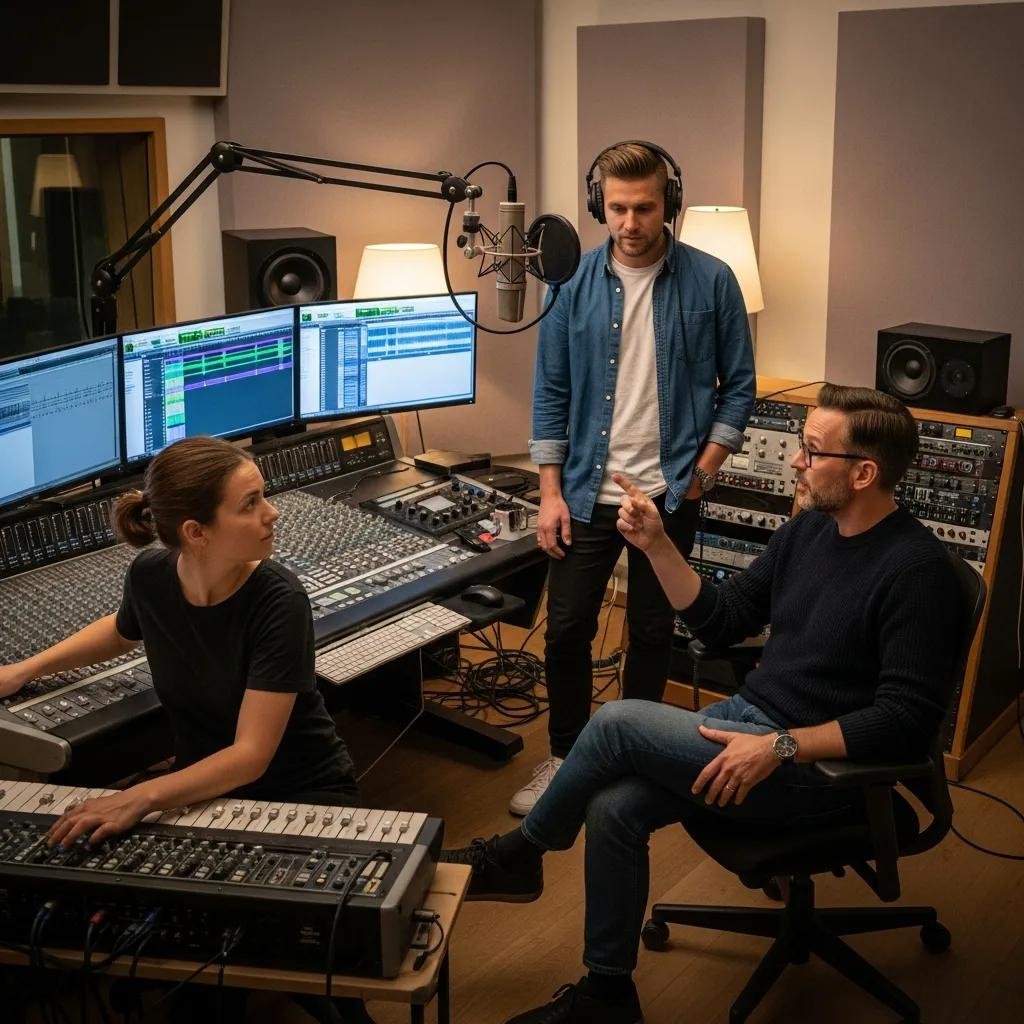
Productive collaboration starts with a clear brief that states the objective, audience, desired tone, and timing. Follow that with concise session direction, file expectations, and a revision workflow. Supply annotated scripts with performance notes, timing markers, and pronunciations to remove ambiguity. In the studio, give specific direction—emotional targets, reference reads, and tempo cues—so talent can iterate quickly. After the session, confirm deliverable formats and revision windows so the engineer can deliver ready‑to‑use files. Clear roles and instructions shorten production cycles and preserve the brand voice across assets.

Below is a practical role table outlining responsibilities, deliverables, and timing expectations for core production team members.

Production RolePrimary DeliverableDirection & Timing Notes
Voice talentClean takes with consistent emotional intentFollow annotated script; provide alternate emphases; manage breath control
Producer / DirectorCreative direction and take selectionProvide reference reads; manage pacing notes; approve selects
Audio engineerEdited, leveled files in required formatsTrack naming, noise removal, and file export per spec

Clear role definitions reduce revision rounds and smooth the handoff into post‑production. The next section offers sample direction templates to use with talent.

What direction should you provide to voice actors for interpretation?

Give short, precise direction that pairs descriptive goals with sonic examples so talent understands both intent and execution. Include the desired tone (for example, “warm, confident, mid‑register”), one or two reference tracks, pronunciation keys for unusual words, and notes about timing or music interaction. Offer alternate phrasings for tricky lines and mark breath points for longer sentences. A standard brief with these elements speeds sessions and improves first‑pass takes.

How do the studio environment and equipment affect voiceover quality?

Microphone choice, room acoustics, and the recording chain shape clarity and character, so specify them in the brief. Choose a mic that suits the voice and genre—condenser or dynamic, depending on proximity and tone—and treat the room acoustically to avoid reflections. Use pop filters and a consistent mic technique to minimize plosives and maintain steady levels. Confirm file formats, bit depth, and naming conventions before the session to prevent technical rework later.

When the technical setup is managed, the talent’s performance becomes the primary driver of final quality. The following section points to templates and resources that accelerate script prep and session readiness.

Where to find voiceover script templates and resources

Templates and annotated examples speed up writing and reduce friction in production by providing teams with a consistent format. Look for genre‑specific templates that include timing markers, performance notes, pronunciation fields, and exportable timing estimates to simplify pre‑production. Use pre‑session checklists—brief approvals, reference files, and technical specs—to ensure sessions start on time and deliverables meet distribution needs. The resources below offer practical starting points and exemplars for commercial, e‑learning, and corporate work.

Below are short, annotated sample scripts that demonstrate how the formats come together in practice.

Examples of effective voiceover scripts

Concrete samples turn abstract guidance into usable lines. A commercial example will show a strong hook, single benefit line, and CTA; an e‑learning excerpt demonstrates signposting and measured phrasing; a corporate sample shows brand‑consistent diction and tempo cues. Each sample includes annotations indicating the hook, pacing markers, and emphasis points so you can adapt them for your brand and record cleanly in the studio.

How to use downloadable templates to streamline scriptwriting

Choose a template for your genre and runtime, then fill the core fields: objective, audience, hook, body points, CTA, and production notes. Match voice and vocabulary to brand guidelines and add pronunciation keys where needed. Do a timed read‑through and tweak the phrasing to meet the runtime and pacing, then attach the custom voice- reference audio and technical specs to the final brief. Templates reduce iteration by clarifying expectations for writers, talent, and engineers while keeping projects consistent.

For teams that want branded production support or downloadable checklists, Sound Branding Ideas provides resources and custom voice-overs delivered by male and female talent. Sound Branding Ideas, founded in 1985 by Cary Reich, emphasizes original audio and lyrics, treating sound as a memory‑building asset; its services include annotated scripts, talent selection, and session direction to accelerate production readiness. If you need templates or hands‑on support to produce brand‑aligned voiceovers, their experience with jingles, slogans, audio commercials, and hold music can offer useful assets and guidance.

  • Templates help standardize production: They reduce ambiguity and speed approvals.
  • Annotated scripts lower studio time: Directions and timing markers cut retakes.
  • Checklists prevent technical rework: Pre‑session specs reduce file issues and delays.

Use these resources to create scripts that translate clearly into performance and final mixes; if you want bespoke templates or production help, consider contacting Sound Branding Ideas for consultation and access to their template sets.

  • Define the objective and audience before writing, and choose a template that matches the runtime.
  • Fill in performance notes and timing markers so the script is session‑ready.
  • Attach reference audio and technical specs when you send the brief to talent and engineers.

These practices speed writing, performance, and production so voiceovers land on message and on time.

Frequently Asked Questions

What are the common challenges in voiceover scriptwriting?

Writers commonly struggle to be both clear and engaging, to keep the script on‑brand, and to pace copy for different formats. Balancing brevity with enough detail to convey complex ideas is often difficult, and adapting the same message across audiences and platforms requires careful tone calibration. Address these challenges with upfront planning, solid audience research, and iterative read‑aloud feedback during the drafting process.

How can I improve my voiceover delivery skills?

Improvement comes from consistent practice and targeted training. Record yourself reading scripts and review pacing, tone, and clarity. Do vocal warm‑ups and articulation exercises, and work on breath control for sustained phrases. Study professional demos for reference, and consider classes or coaching to get constructive feedback. Regularly experimenting with styles and genres builds range and adaptability.

What role does feedback play in voiceover production?

Feedback is essential: it refines both script and performance. Constructive notes from producers, directors, and peers reveal issues with pacing, emotion, or clarity. On‑session feedback lets talent iterate in real time, improving first‑pass takes. Post‑production feedback guides editing and mixing decisions so the final file matches the creative brief. Regular, specific feedback shortens revision cycles and improves outcomes.

How do I choose the right voice talent for my project?

Start by defining the project’s tone, audience, and the vocal qualities you need. Listen to demo reels to assess range and suitability, and run auditions with sample script passages to evaluate interpretation. Choose talent who can deliver the desired emotional register and who fit your brand identity. Practical auditions and clear briefs reduce casting risk.

What are the best practices for script revisions?

Set a clear revision process, deadlines, and stakeholder review points. Check scripts for clarity, pacing, and alignment with objectives, and incorporate notes from talent and engineers to ensure performance readiness. Use read‑aloud sessions to spot awkward phrasing or timing issues, and keep version control so everyone works from the current draft.

How can I ensure my voiceover script is culturally sensitive?

Research your audience’s cultural context and avoid idioms or references that may not translate. Consult cultural experts or representatives from the target demographic to vet language and themes. Use inclusive phrasing and test scripts with a diverse sample of listeners to catch potential issues before production.

Conclusion

Strong voiceover scripts and mindful delivery create memorable brand moments. By setting clear objectives, using structured formats, and tailoring language and pacing to your audience, you can improve listener retention and drive the actions you want. Explore templates and resources to streamline your workflow and raise the quality of your audio branding. Start applying these practices now to ensure your brand’s voice is heard—and remembered.