
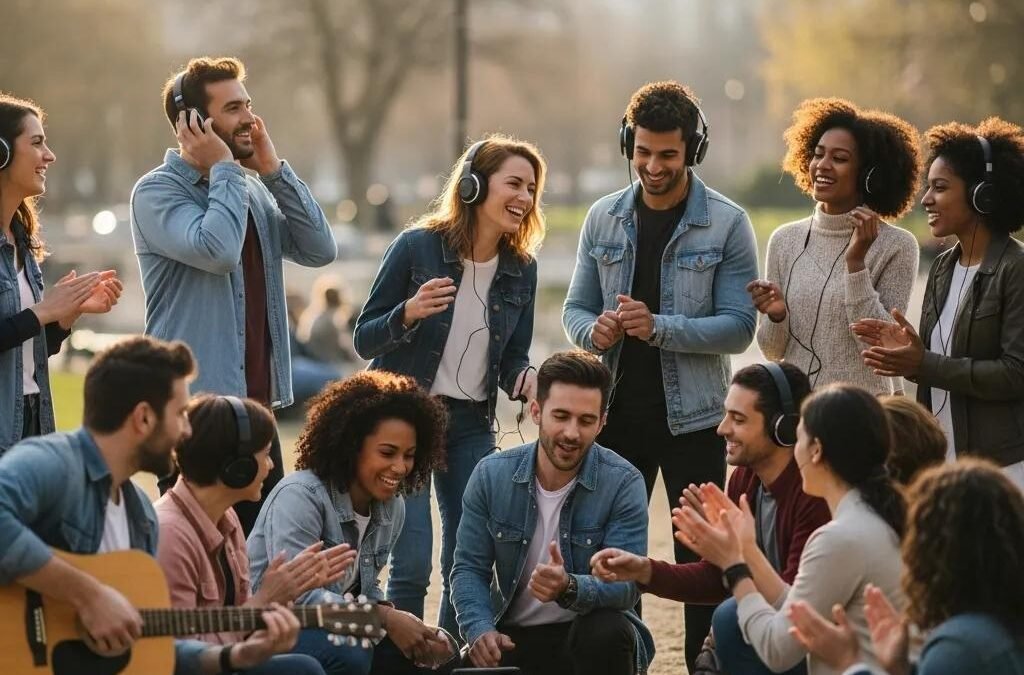
Understanding Your Audience Through Sound: Mastering Sonic Branding and Audio Marketing
What is the role of Sound Preferences in Defining Your Target Audience?
- Genre & Era Indicators: Preferred genres often correlate with generational groups and cultural identity.
- Production Preferences: Stripped-down acoustic arrangements tend to signal to audiences that the artist is seeking authenticity, while the artist's electronic production appeals to trend-focused listeners.
- Vocal & Instrument Attributes: Vocal delivery, timbre, and instrumentation suggest the brand personality and emotional tone audiences expect.
How Do Demographics Influence Consumer Audio Preferences?
What Psychological Factors Shape Brand Sound Identity?
How Can Businesses Research and Analyze Audience Sound Preferences Effectively?

- Define Objectives: Clarify whether you're measuring genre preference, emotional fit, recall, ad effectiveness, or another outcome.
- Select Methods: Pick a mix of surveys, focus groups, social listening, and biometrics based on goals and budget.
- Design Stimuli: Create short audio clips with varying tempo, timbre, instrumentation, and vocal delivery for testing.
- Collect & Analyze: Combine quantitative preference scores with qualitative notes on emotion; triangulate findings with behavioral data.
- Prototype & Iterate: Build sound prototypes and run A/B tests in context to validate performance before full rollout.
| Research Method | What It Measures | Typical Insight / Example |
|---|---|---|
| Surveys & Listening Tests | Stated preferences and comparative ratings | Shows a target cohort prefers acoustic guitar over synth |
| Focus Groups | Contextual feedback and the language people use about sound | Reveals a tagline feels "authentic" versus "commercial" to participants |
| Social Listening | Trends, mentions, and organic audio behavior | Detects rising interest in lo-fi beats within a region |
| Biometric Testing | Physiological emotional responses (GSR, HR, facial) | Identifies which jingle variant produces stronger emotional arousal |
What Tools and Methods Uncover Consumer Audio Preferences?
How Does the Social Listening and Biometric Testing Enhance Audio Audience Research?
Why is the Psychology of Sound Crucial for Consumer Behavior and Branding?
How Do Emotional Responses to Sound Impact Brand Recognition?
What Cognitive Processes Affect Audience Engagement with Sonic Identities?
How to Create a Sonic Identity Tailored to Your Target Audience's Sound Preferences?

| Audience Segment | Preferred Sound Attributes | Design Implication / Example Asset |
|---|---|---|
| Young Trendsetters | Upbeat tempo, electronic textures, bright timbres | Short synth-based jingle with modern vocal chops |
| Professionals / Corporate | Warm timbre, mid-tempo, minimal arrangement | Polished sonic logo and authoritative voiceover for ads |
| Heritage / Traditionalists | Acoustic instruments, slower tempo, rich harmony | Orchestral-style motif with resonant male or female vocals |
| Eco-conscious Consumers | Natural textures, organic percussion, sparse mix | Acoustic guitar motif with intimate, breathy voiceover |
What Are the Sonic Personas and How Do They Guide Audio Branding?
How to Dethe the Sign Jingles, Voiceovers, and Brand Music for Specific Audiences?
What metrics and KPIs measure the Impact of Audience-Centric Sound Branding?
| KPI | How It's Measured | Benchmark / Interpretation |
|---|---|---|
| Awareness Lift | Brand-lift survey pre/post | Positive lift shows greater recognition linked to audio |
| Ad Attribution | Conversion tracking with attribution windows | Higher conversions after audio exposure suggest impact |
| Engagement | Completion rates, listening time, repeat plays | Higher completion signals relevance and attention |
| Recall | Aided and unaided recall testing | Rising unaided recall indicates strong encoding and retrieval |
| Sentiment | Social listening sentiment analysis | Positive sentiment growth indicates favorable associations |
How to Evaluate Engagement and Brand Awareness Through Audio?
What are the best practices for Continuous Monitoring and Optimization?
- Establish a review cadence: Quarterly strategy reviews and monthly tactical checks.
- Use A/B testing: Validate changes on a subset before full rollout.
- Maintain governance: Brand templates and guidelines preserve identity while allowing local variation.