
We’re eager to bring your sound ideas to life!

E-mail Us Cary@SoundBrandingIdeas.com

w

Chat With Us Below
We're always here!

Call Us Today!
866-826-6692

Designing Motivational Audio for Fitness Apps and Workouts: Using Custom Sound to Boost Engagement

Motivational audio in fitness apps blends music, voice, and functional cues to shape pacing, effort, and mood during workouts — improving performance through rhythm and clear verbal framing. This guide breaks down how motivational audio works (tempo entrainment, arousal modulation, and instructional prompts), why it improves retention and session quality, and which deliverables product teams should prioritize to increase engagement. You’ll find practical design patterns, a cue taxonomy, production formats, licensing options, and emerging AI personalization strategies that are well-suited to modern exercise apps. The guide connects psychological mechanisms to concrete audio solutions and includes comparative tables to help product decisions. Brief examples show how original voice-overs and bespoke music fit into production without becoming a vendor pitch. Our goal is to give designers, sound engineers, and product managers clear patterns and semantic frameworks for creating motivational audio that aligns with user journeys and KPIs.

How Does Motivational Audio Impact Fitness App User Performance?

Motivational audio affects performance by aligning sound with physiological and cognitive processes: it raises arousal, sharpens attention, and enables tempo entrainment for steadier pacing. When tempo matches cadence or target heart rate, users tend to synchronize movement to the beat, lowering perceived effort and improving output; verbal cues add instruction and social encouragement that sustain effort. Research and practical trials show that music and cue design can increase session intensity and enjoyment, which supports longer sessions and better retention. With this understanding, product teams can design soundtracks and prompts that target outcomes like improved cadence, reduced dropouts, or tighter interval compliance.

Three primary mechanisms and their benefits emerge from recent studies and trials:

  • Rhythm entrainment aligns tempo with movement to improve pacing and endurance.
  • Arousal modulation — changes in energy and instrumentation — shifts perceived exertion and motivation.
  • Instructional and motivational voiceovers focus attention and lower cognitive load during complex movements.

These mechanisms point to a strategic approach: match musical and verbal elements to the workout phase (warm-up, intervals, peak, cooldown), measure engagement, and iterate on your sonic identity to support habit formation.

What Is the Psychological Effect of Music and Audio Cues During Workouts?
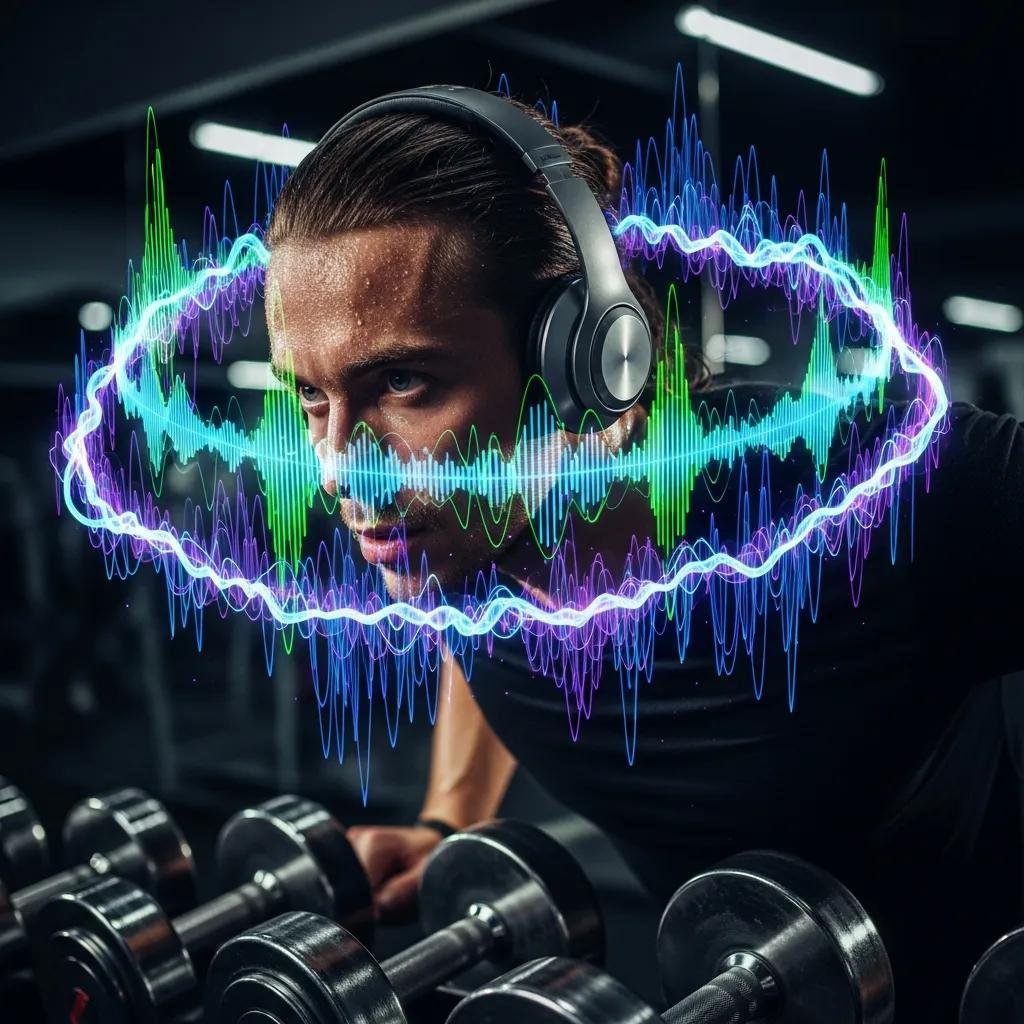
Music and audio cues reshape perception and physiology by altering arousal, directing attention, and providing temporal structure that lowers cognitive effort. Tempo and rhythm drive movement through entrainment — faster BPMs typically increase cadence, while steady rhythms help sustain endurance; melody and harmony shape mood and perceived exertion. Verbal cues act as cognitive anchors, offering concise instructions or encouragement that reduce the mental load of managing form or transitions. Designers should choose tempi, lyrical content, and cue timing to match goals: use sparse instructions during high-intensity phases and more descriptive prompts during technical segments to balance motivation and safety.

This psychological framing naturally leads to practical choices for engagement metrics, which we explore next in the context of retention and brand recall.

How Does Custom Audio Enhance User Engagement and Retention in Fitness Apps?

Custom audio improves engagement and retention by creating a distinctive sonic identity and personalized listening experience that reinforces habit loops and emotional connections with the app. Bespoke music and original voiceovers boost brand recall and avoid the sameness of generic playlists, while adaptive cues and soundscapes let the app respond to real-time metrics like pace or heart rate. Trackable KPIs for custom audio include session length, repeat plays of program tracks, and churn rates for guided classes — these metrics validate audio design choices. For example, a branded interval soundtrack with tailored motivational drops can increase adherence by raising perceived value and creating consistent multisensory cues that encourage return visits.

These retention effects shape which audio deliverables and integration approaches should appear in product roadmaps, as outlined below.

What Are Effective Custom Audio Solutions for Fitness Apps?
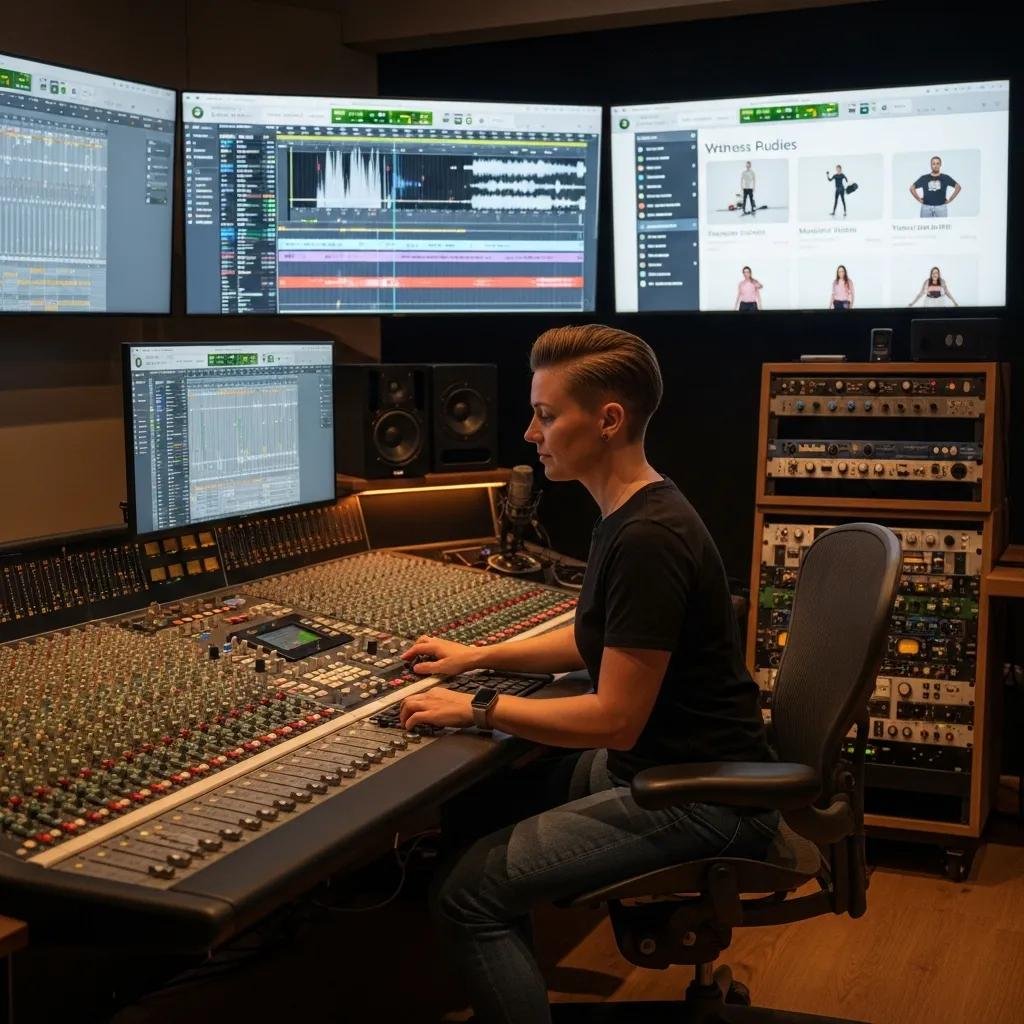
Effective custom audio solutions include motivational voiceovers, branded music tracks, adaptive soundscapes, and cue packs that cover timing and corrective prompts — each serves a specific intent, typical length, and integration point. Voiceovers deliver concise guidance and encouragement during warm-ups and intervals; branded tracks provide identity and pacing; adaptive soundscapes respond to biometrics to enhance immersion; cue packs supply short sounds for timers and form corrections. When choosing solutions, consider format (pre-rendered vs. streamed), reactivity (static vs. sensor-driven), and licensing/ownership to decide whether to commission custom work or use curated libraries. The table below helps product and engineering teams prioritize implementation choices.

SolutionIntentTypical LengthIntegration Point
Motivational VoiceoversGuide and inspire users5–20 seconds per cueInterval prompts, form corrections
Branded Music TracksSonic identity and pacing2–5 minutes per trackClass soundtracks, program playlists
Adaptive SoundscapesReal-time immersion and energy shiftsVariable (looped assets)HR/pace-driven tempo changes

These options show how deliverables map to UX needs; a balanced mix of voice, music, and adaptive assets covers instruction, motivation, and brand consistency without overloading any single channel.

Below is a concise list of common solution types and where they add value in an app:

  • Motivational voiceovers: Short, actionable lines that provide instruction and social encouragement during intervals and technical segments.
  • Branded music tracks: The app’s sonic fingerprint — consistent pacing and emotional framing across classes and programs.
  • Adaptive soundscapes: Sensor-driven layers that respond to biometric inputs for greater immersion and effort matching.
  • Cue packs: Compact sounds — beeps, chimes, and brief verbal prompts — for timers and form correction.

Choosing the right mix depends on product goals, technical limits, and rights management. The next sections explain the roles of voice and music in more detail and describe how vendors typically support production.

How Do Motivational Voiceovers Guide and Inspire Workout Users?

Motivational voiceovers are short, persona-led recordings that pair clear instructions with scaled encouragement to sustain effort and provide safety cues. Voice persona choices — authoritative vs. conversational, energy level, and gender presentation — should align with the brand and target audience while keeping phrasing concise and actionable. Scripts usually alternate brief directives (e.g., “Three, two, push—breathe”) with motivating lines at key peaks, and timing must match interval boundaries to avoid cognitive friction. Best practices include recording multiple takes at varied intensities, applying consistent loudness standards, and offering localized variations for regional markets.

These voice design practices support better adherence and clearer instruction, which ties into the cue taxonomy and UX outcomes covered next.

What Role Do Branded Music and Adaptive Soundscapes Play in Workout Platforms?

Branded music and adaptive soundscapes provide a continuous sonic context that supports pacing, emotional framing, and brand recall across workouts. Musical motifs, timbre choices, and energy curves help match session phases. Adaptive systems adjust tempo, instrumentation, and intensity in response to sensors such as pace or heart rate, enabling smooth transitions from warm-up to high-intensity without jarring cuts. From a production perspective, deliverables should include stems and metadata for runtime mixing, as well as pre-rendered masters for offline playback, to ensure reliability. File-format decisions — multitrack stems versus single mixes — affect storage and streaming, so plan production according to whether tracks will be reactive or static.

Focusing on adaptive behavior yields cue design patterns that enhance functionality and reduce abandonment.

How Can Audio Cues Improve Exercise App Functionality and User Experience?

Audio cues improve app functionality by providing timing cues, corrective guidance, and motivational reinforcement, thereby reducing cognitive load and guiding behavior during workouts. Timing cues (beeps, countdowns) structure intervals and transitions so users can stay on pace without checking screens; form-correction cues give short verbal prompts when sensors detect common errors; motivational prompts boost effort at peak moments and reduce perceived exertion. Design rules — brevity, consistent vocabulary, and appropriate loudness — make cues effective without being disruptive. Evaluate cue effectiveness by tracking abandonment, error rates, and post-session satisfaction so you can iterate on content and trigger thresholds.

The table below outlines cue types, sound characteristics, recommended durations, and trigger events to help with planning and implementation.

Cue TypeSound TypeRecommended DurationTrigger Event
Timing cuesShort tones or clicks0.2–1.0 secondsInterval start/end
Form correctionConcise verbal prompt1–3 secondsSensor-detected alignment errors
Motivational promptsBrief upbeat line1–4 secondsUser reaches target heart rate or interval peak

This taxonomy clarifies how cues map to UX problems and technical triggers, helping teams allocate audio budgets and engineering effort efficiently.

To make cue design actionable, follow these practical rules and implementation notes:

  • Brevity over detail: Keep cues short so they don’t interrupt flow and remain immediately clear.
  • Distinctive sounds: Give each cue type a unique timbre to avoid confusion.
  • Contextual triggers: Tie cues to clear sensor or timer events to reduce false positives.

Applying these rules reduces friction and lets users focus on their workout rather than device interactions, leading to conversational cue patterns that reduce abandonment.

What Types of Audio Cues Are Used for Timing, Form Correction, and Motivation?

The main cue types are timing cues (beeps and countdowns), form-correction cues (brief verbal instructions), and motivational prompts (short encouraging phrases); each should be clear, sonically distinct, and brief. Timing cues provide temporal anchors, allowing users to sync movements with minimal visual attention; form cues must be concise and specific, using direct verbs and a neutral tone to prompt correction without judgment. Motivational prompts use higher energy and often align with peak intervals to amplify focus. For robust delivery, engineers should provide a low-latency audio path for cues, and designers should create fallback visual indicators for accessibility.

These cue types inform conversational micro-prompts aimed at reducing task abandonment, discussed next.

How Do Concise Conversational Cues Reduce Task Abandonment in Fitness Apps?

Concise conversational cues reduce abandonment by delivering timely, context-aware prompts that lower friction and keep users in flow. Short, empathetic lines paired with a next-step instruction (for example, “Two more, steady — then rest”) reassure users and cut decision fatigue, increasing completion rates. A/B test voice tone, phrase length, and trigger timing to measure impact on funnel metrics and retention. Templates for conversational cues should prioritize clarity, brevity, and a sense of social presence to maximize persuasive power without irritation.

Implementing this approach usually means mapping cues to funnel stages and running experiments to measure reductions in abandonment and gains in session completion.

Why Choose Sound Branding Ideas for Designing Fitness App Audio?

Sound Branding Ideas is a sound branding agency that produces original audio — jingles, slogans, voiceovers, and audio commercials, and brings specialized expertise for fitness app audio through custom voiceovers and jingle creation. We emphasize 100 percent original audio and lyrics, diverse musical talent, and decades of industry experience, positioning us to deliver bespoke sonic identities and production-grade assets for workout platforms. For product teams that need ownership and creative direction, these strengths map directly to needs around brand recall, rights clarity, and tailored motivational content. Our background in lead generation also informs deliverables that support conversion and retention through sound-led differentiation.

Below is a clear summary of our process and how we support fitness audio production.

What Is Our Process From Concept to Implementation of Custom Fitness Audio?

We start with discovery and brief alignment to define outcomes, audience persona, and the desired emotional arc, ensuring the audio supports the product roadmap and KPIs. Production then moves into scripting and composition, where voice and music ideas are developed into short prototypes for rapid testing; performers and arrangers are chosen to match the brand’s tone and energy. Recording and mixing produce masters and stems with metadata and delivery formats suited to both streaming and runtime adaptation, and QA verifies loudness normalization and file integrity across devices. Integration support includes handing off stems, cue files, and implementation guidance, enabling engineering teams to add adaptive logic and triggers with minimal friction.

This phased approach balances creative iteration with technical handoff, enabling product teams to integrate high-quality audio while retaining control over rights and playback behavior.

Why Does Originality Matter Beyond Stock Audio in Fitness Sound Design?

Originality matters because bespoke compositions and custom voiceovers send clear brand signals, improve recall, reduce legal risk, and let designers shape precise emotional journeys for workout phases. Stock audio can be cost-effective but often lacks differentiation and can carry licensing restrictions that complicate monetization or ownership. Original tracks and lyrics allow full rights assignment and flexible adaptation — important for multi-market localization and stem-based playback. From a UX perspective, original assets give precise control over instrumentation, dynamic range, and motivational beats to optimize tempo entrainment and emotional pacing for targeted outcomes.

These benefits explain why investing in original audio is both a creative and strategic product decision when sound is intended to be a measurable engagement lever.

What Are Emerging Trends in AI and Personalized Audio for Fitness Technology?

Emerging trends focus on AI-driven personalization, hybrid human/AI production workflows, and sensor-driven adaptive audio that scale bespoke experiences without losing warmth. AI voice synthesis enables fast localization and personalized coaching lines while human oversight preserves expressive nuance where motivation matters; hybrid workflows combine synthesis speed with human quality control. Adaptive audio increasingly uses biometrics — heart rate, cadence, GPS pace — to tweak tempo, instrumentation, and vocal intensity in real time, creating more responsive sessions. Product teams should balance scalability with ethical concerns, be transparent about the use of AI voice, and preserve human warmth in moments when social presence is most effective.

These trends suggest tactical choices: use AI for scale and A/B testing, reserve human recording for high-impact moments, and build infrastructure that supports adaptive mixing and low-latency triggers.

How Does AI Voice Integration Harmonize with Human-Crafted Motivational Audio?

AI voice integration complements human-crafted audio by providing scalable, localized variants while leaving signature moments to human performers for emotional authenticity. AI is ideal for dynamic messages, user-name personalization, and routine updates that would be expensive to record at scale; human recordings remain preferable for peak motivational cues and brand-defining personas. Best practices include voice matching, human-in-the-loop approvals, and clear user disclosure when synthetic voices are used to maintain trust. Quality control should cover prosody, pronunciation, and timing to avoid disrupting flow.

Hybrid patterns let teams achieve both breadth and depth in audio personalization without sacrificing brand identity.

What Are Adaptive and Immersive Audio Experiences in Future Fitness Apps?

Adaptive and immersive audio use sensor inputs and spatial techniques to adjust musical energy, spatialization, and ambient layers to suit workout context and boost motivation. Sensor-driven tempo shifts increase intensity or simplify arrangements during recovery to reduce cognitive load, while spatial and binaural elements enhance immersion in guided classes and virtual environments. Personalization at scale relies on modular assets (stems and layers) and runtime mixers that adjust levels and tempo with low latency, enabling live-feel transitions. These approaches create more engaging sessions and open opportunities for premium tiers offering immersive soundtracks.

When planning for this future, prototype adaptive stems and test with live user groups to balance immersion with battery and latency constraints.

How to Address Music Licensing and Copyright for Fitness App Audio Content?

Address music licensing by choosing an approach that balances cost, control, and legal safety: options include stock licenses, royalty-free libraries, custom composition with buyout, and full ownership via work-for-hire agreements. Each has trade-offs: stock is fast but rights are limited, royalty-free offers broad catalogs but may include restrictions, and custom composition with assignment provides full control at a higher upfront cost. Best practices include documenting usage terms, securing clear territorial and platform rights, and ensuring metadata and masters are delivered to prove ownership and simplify audits. When full control over branding and monetization is required, commissioning original audio with an explicit rights assignment avoids recurring licensing ambiguity.

The table below summarizes common licensing approaches, characteristics, pros/cons, and typical cost implications to help product and legal teams choose the right path.

ApproachCharacteristicPros/ConsCost Implication
Stock licensePre-existing commercial tracksFast but limited rights; potential reuse by othersLower upfront, recurring limits
Royalty-free libraryBroad catalogs with limited feesFlexible use, but may have restrictionsModerate license fee, low ongoing costs
Custom composition (buyout)Original work with negotiated ownershipFull control and uniqueness; higher initial costHigher upfront, minimal future fees
Work-for-hire / assignmentContracted transfer of rightsMaximum legal clarity; ideal for app ownershipHighest upfront, simplifies long-term use

Choosing the right approach depends on product strategy: hobbyist apps may prefer library options, while brands seeking differentiation and monetization typically invest in custom composition with clear rights assignment.

What are the best practices for Music Licensing in Fitness Content?

Best practices include documenting territory, platform, and usage duration in every license; favoring full assignments for brand-defining assets; and keeping complete records of masters and metadata to resolve disputes. Audit any third-party samples to confirm clearance before release and avoid ambiguous “perpetual” or “non-transferable” clauses that can hinder future plans. For international distribution, verify synchronization and mechanical rights where applicable and consider buyout arrangements for key assets to remove ongoing complexities. These routines protect the app from takedowns and support confident marketing and monetization.

Following these practices reduces legal friction and supports long-term control over your sonic branding, leading to contractual terms that ensure copyright-free soundtracks.

How Can Custom Audio Solutions Ensure Copyright-Free Fitness App Soundtracks?

Custom audio yields copyright-free soundtracks when contracts clearly assign all rights — ideally via work-for-hire clauses and written assignment of masters and publishing — so the app controls reproduction, adaptation, and distribution. Avoid unlicensed third-party samples, request warranties that all elements are original or cleared, and require delivery of stems, masters, and metadata to document provenance. QA before launch should include metadata verification, rights audits, and checks for inadvertent similarities that could trigger claims. Clear contractual terms and thorough documentation are the best defenses against copyright disputes and enable global distribution.

These contractual and QA steps complete an audio program that is both legally defensible and optimized for long-term product use. For teams that need help with production and rights management, selective agency support can streamline delivery.

The team at Sound Branding Ideas can help with original voiceovers and jingle creation, emphasizing original audio and clear rights assignment so your fitness app’s soundtracks are distinctive and legally secure. Our services show how bespoke production and careful contracting combine to create effective, owned sonic assets.

Frequently Asked Questions

What are the benefits of using customized sounds in fitness apps?

Custom sounds enrich the workout experience by creating a unique audio environment that connects with users emotionally. This personalization reinforces habits and strengthens brand recognition, keeping users engaged longer. Tailored audio can improve motivation and performance, helping users get more from each session. In a crowded market, distinctive audio also helps an app stand out.

How can motivational audio influence user psychology during workouts?

Motivational audio works as a behavioral cue that boosts performance and focus. Well-timed music and voice prompts evoke emotions and action patterns that translate into greater effort, delayed fatigue, and improved endurance. Positive audio cues can make users feel supported and less anxious about workouts, providing encouragement exactly when it’s needed.

What role does audio content play in workout compliance?

Audio content is central to workout compliance because it entertains, motivates, and guides users through workouts. Soundtracks synced to intensity make exercises more enjoyable and easier to follow. Personalized cues that reflect user progress can promote consistency and help turn one-off sessions into lasting habits.

How can fitness apps utilize AI in audio personalization?

Apps can use AI to personalize audio by analyzing user data and curating soundtracks that match preferences and performance patterns. AI can adjust tempos and styles in real time to sustain motivation and synthesize voice prompts for different skill levels. Combined with human oversight, AI enables scalable, tailored experiences.

What are the risks associated with using stock audio in fitness apps?

Stock audio carries legal and differentiation risks: licensing restrictions can limit usage, and common tracks may weaken brand identity. Users may encounter the same music across multiple apps, reducing engagement. Custom compositions avoid these issues by delivering uniqueness and clearer rights for long-term use.

In what ways can audio cues support interval training?

Audio cues support interval training by signaling transitions between high- and low-intensity segments. Timing cues help users stay on target without watching a screen, and motivating prompts at peak effort energize users and improve adherence. Clear, well-timed audio makes intervals easier to follow and more effective.

What should app developers consider when integrating audio features?

Developers should consider user preferences, workout types, and the intended experience when adding audio features. Ensure audio enhances focus rather than distracts, and prioritize usability and accessibility. Technical considerations include adaptive soundscapes, low-latency playback, and cross-device reliability.

Conclusion

Custom motivational audio can meaningfully improve engagement by building emotional connections between users and their workouts. Thoughtful use of cues and soundtracks boosts performance, retention, and overall enjoyment, helping users stick to their fitness goals. If you want to elevate your fitness app, explore audio solutions that match your audience and KPIs — and consider working with experts who specialize in tailored audio experiences to get started.