

Mastering Voiceover Scriptwriting and Delivery: Sound Branding Ideas
How do you write a clear, engaging voiceover script?
- Define the audience and objective first so every line has purpose.
- Write conversationally: short sentences, active verbs, natural contractions when appropriate.
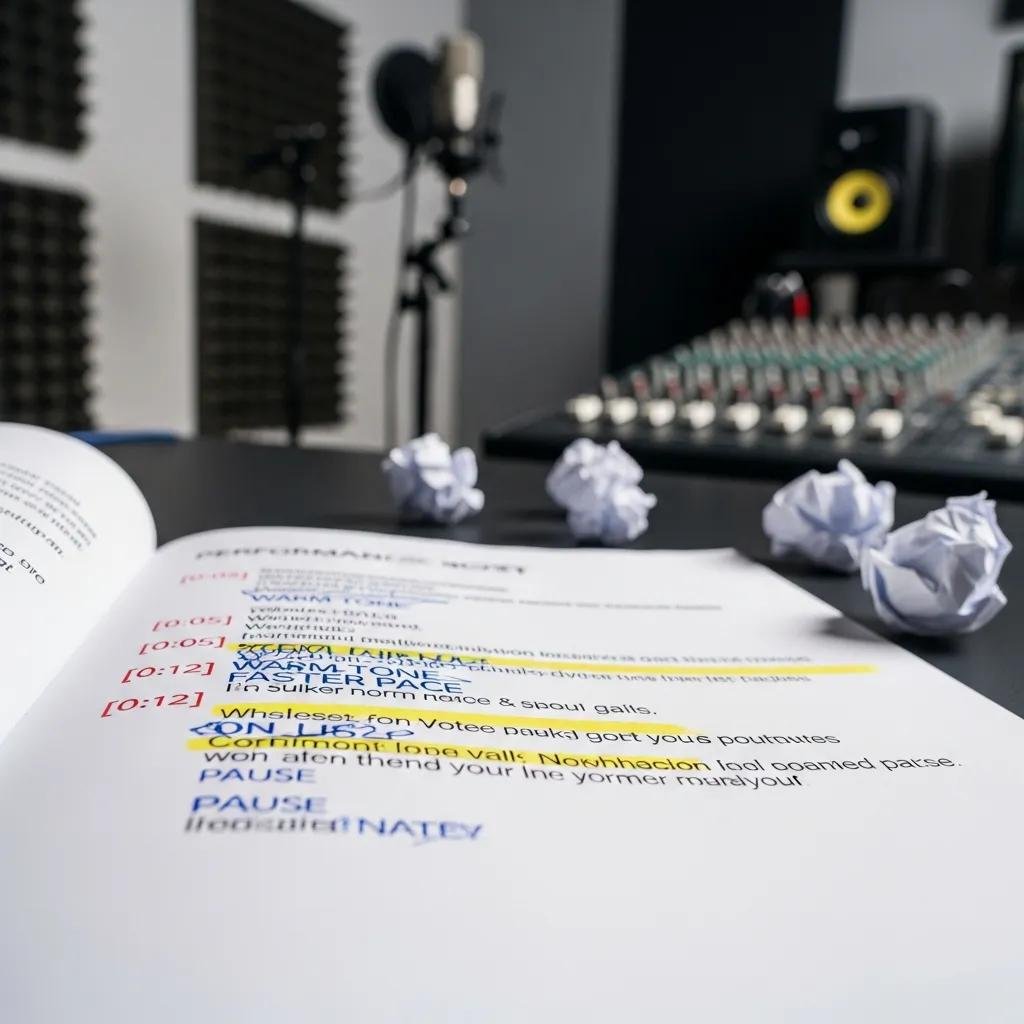
- Include parenthetical performance notes for pauses, emphasis, and tricky pronunciations.
- Finish with a specific, time-bound call to action that suits the medium.
What are the key elements of an effective voiceover script?
How to structure your voiceover script for maximum impact?
| Script Type | Tone & Emotional Goal | Typical Length | CTA Strength | Sample Word Count |
|---|---|---|---|---|
| Commercial voiceover scripts | Energetic, persuasive, immediate engagement | Very short (15–60s) | Strong, direct CTA | 40–160 words |
| E-learning voiceover scripts | Clear, measured, comprehension-focused | Variable (module-based) | Weak or instructional CTA | 100–700+ words per module |
| Corporate narration scripts | Professional, brand-aligned; steady tone | Medium to long (1–5+ mins) | Subtle, brand-focused CTA | 150–750 words |
Best practices for voiceover script length and pacing
| Voiceover Type | Typical WPM | Pacing Notes |
|---|---|---|
| Conversational commercial | 140–160 wpm | Keep forward energy; brief pauses for emphasis |
| Narration / Explainer | 130–150 wpm | Slow slightly for comprehension; allow transitions |
| E-learning / Technical | 110–130 wpm | Slower pacing with extra pauses for complex info |
How long should a voiceover script be per minute?
How to adjust pacing and timing for different voiceover types?
How to write voiceover scripts for different genres and audiences
Differences between commercial, e-learning, and corporate scripts
How to tailor your script to your target audience and brand voice
Vocal techniques that improve voiceover delivery
How do tone, inflection, and emotion shape performance?
Common delivery mistakes and how to avoid them
How to collaborate with voice talent and audio engineers for optimal results

| Production Role | Primary Deliverable | Direction & Timing Notes |
|---|---|---|
| Voice talent | Clean takes with consistent emotional intent | Follow annotated script; provide alternate emphases; manage breath control |
| Producer / Director | Creative direction and take selection | Provide reference reads; manage pacing notes; approve selects |
| Audio engineer | Edited, leveled files in required formats | Track naming, noise removal, and file export per spec |
What direction should you provide to voice actors for interpretation?
How do the studio environment and equipment affect voiceover quality?
Where to find voiceover script templates and resources
Examples of effective voiceover scripts
How to use downloadable templates to streamline scriptwriting
- Templates help standardize production: They reduce ambiguity and speed approvals.
- Annotated scripts lower studio time: Directions and timing markers cut retakes.
- Checklists prevent technical rework: Pre‑session specs reduce file issues and delays.
- Define the objective and audience before writing, and choose a template that matches the runtime.
- Fill in performance notes and timing markers so the script is session‑ready.
- Attach reference audio and technical specs when you send the brief to talent and engineers.