
Protecting Your Brand's Sonic Assets with Sound Trademarks by Sound
A sound trademark is an audio element that identifies the source of goods or services, and protecting that sound secures a non-visual asset that consumers associate with your brand. This guide explains what a sound trademark is, why distinctiveness and non-functionality matter, and how the registration process at offices like the USPTO and international systems operates in practice. Readers will learn the step-by-step filing pathway, the legal differences between trademarks and copyright for audio, the evidence that proves acquired distinctiveness, and practical design strategies to create trademark-ready sonic identities. The article also covers enforcement pathways, monitoring best practices, and how to design audio logos, jingles, and mnemonic chimes that avoid functional pitfalls. After explaining legal and creative fundamentals, the guide shows how to translate musical ideas into documented assets suitable for application and commercial protection.
What Is a Sound Trademark and Why Does It Matter?
A sound trademark is an audio element—such as a melody, jingle, or mnemonic chime—that serves as a source identifier for goods or services and distinguishes one brand from another in the marketplace. Legally, a sound mark communicates origin to consumers through auditory recognition, which produces brand recall and creates commercial value; its effectiveness depends on distinctiveness and non-functionality. Sound trademarks convert marketing assets into enforceable IP when they meet statutory criteria and are supported by evidence of use, and understanding these requirements is essential before investing in sonic branding. The following subsections explain how sound marks shape brand identity and list canonical examples that illustrate registrability and market impact.
How Does a Sound Trademark Define Brand Identity?
A sound trademark defines brand identity by conditioning listeners to associate a specific sonic pattern with a brand’s products or services, creating instant recognition and memory cues. Auditory elements such as melody, rhythm, instrumentation, and timbre serve as mnemonic hooks that trigger associative memory networks, making the brand more salient in advertising and point-of-sale contexts. For marketing teams, the mechanism is both psychological and functional: repeated exposure via ads, apps, and on-hold music strengthens the link between sound and source, increasing recall and purchase intent. These recognition effects also influence trademark evaluators, since sustained public association supports claims of acquired distinctiveness during examination.
What Are Famous Examples of Registered Sound Marks?

Several well-known sound trademarks show how short audio cues can become powerful brand assets by demonstrating distinctiveness and wide consumer recognition. For example, iconic broadcast and streaming chimes or brief audiovisual stingers have been registered as trademarks after showing that the sounds primarily function as brand identifiers rather than utilitarian signals. Each precedent illustrates how a concise melodic hook or sonic logo can serve as a source identifier when fixed, documented, and used consistently across commerce. Observing these examples helps creators shape short, memorable audio signatures that align with legal expectations for distinctiveness and use.
How to Register a Sound Trademark: Step-by-Step Process
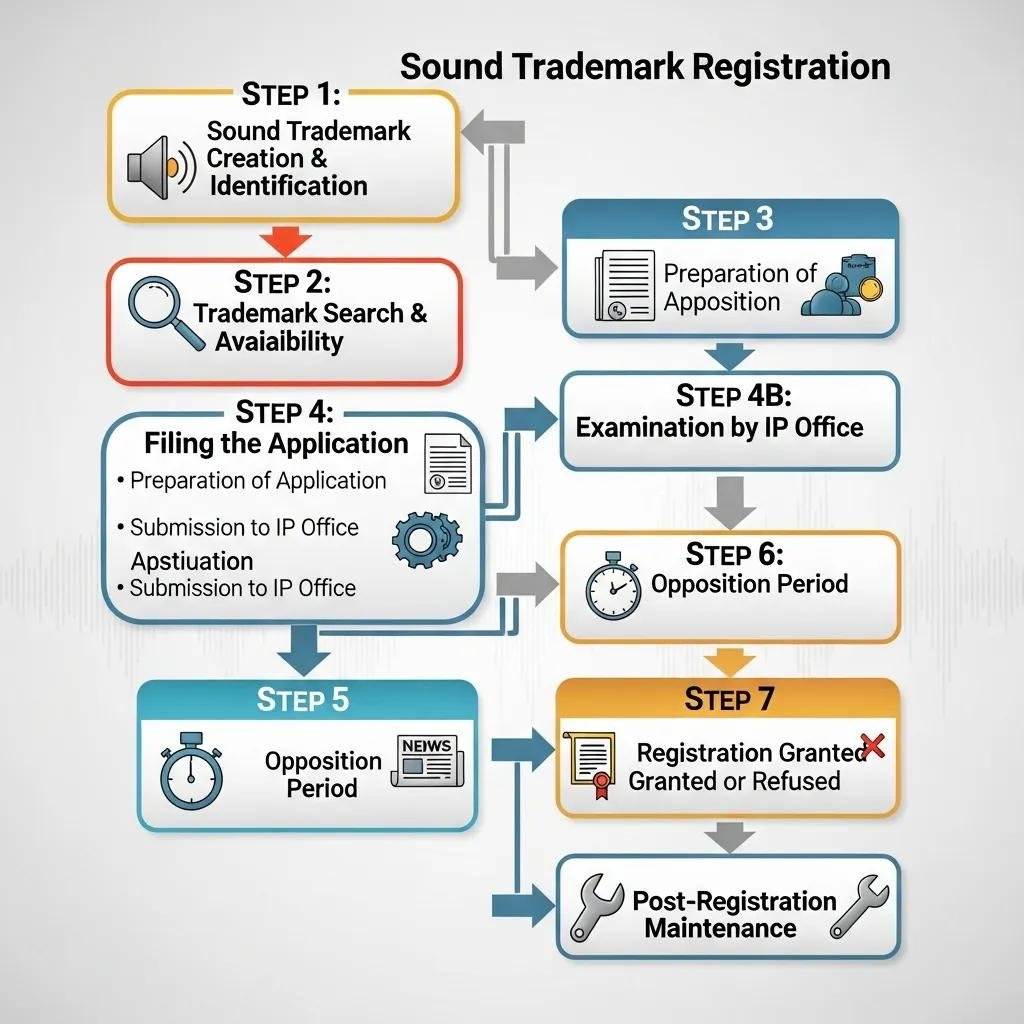
Registering a sound trademark requires a sequence of preparation, filing, examination, publication, and potential opposition before registration is granted; planning each step reduces the risk of office actions or refusals. Pre-filing searches and clearance reduce conflicts with existing marks, while compiling the correct specimen, an accurate aural description, and the required audio file format addresses USPTO technical expectations. The process includes official examination for the likelihood of confusion and distinctiveness, followed by publication for opposition and eventual registration. Below are practical steps, optimized for clarity and snippet potential, followed by a concise EAV table that maps application steps to typical requirements and timeframes.
Begin with a pre-filing clearance search to surface similar sound marks and identify potential conflicts, because search results guide application strategy and classification. Preparing the application package focuses on technical compliance—audio file formatting, a clear written description, and a specimen showing use in commerce —which together form the core of the filing. After submission, expect an examination that centers on distinctiveness and the potential for confusion; the examination period and possible office actions require responsive evidence and clarifications. Successful navigation of these stages improves chances of registration and positions the sound mark for enforceability.
This numbered list summarizes the typical filing pathway and expected timing:
- Search and clearance: identify similar registrations and pending marks, typically 1–3 weeks.
- Prepare specimen, description, and audio file (format-compliant), typically 1–4 weeks depending on assets.
- File application and await examination (USPTO review), typically 3–6 months.
- Publication for opposition and potential opposition period, typically 30 days.
- Registration issuance or registration after proving acquired distinctiveness, if required, the timeline varies.
A clear conclusion of this pathway is that thorough pre-filing preparation and evidence collection accelerate the examination phase and reduce the likelihood of extended office actions.
An introductory explanation of the required filing elements and estimated timing precedes the detailed EAV table below, which maps each application step to the core materials and the common timeframes applicants should expect.
What Are the USPTO Requirements for Sound Mark Registration?
The USPTO requires an accurate identification of the mark, a clear written description of the sound, a specimen showing the sound’s use in commerce, and an acceptable audio file in a specified format; technical compliance prevents unnecessary office actions. The aural description should describe the sound in objective musical or aural terms—melodic intervals, rhythm, instrumentation—so an examiner can understand the claimed mark without relying on subjective language. Acceptable specimens include commercial audio used in advertising, product packaging with sound, or downloadable audio on commercial websites, each demonstrating the sound’s source-identifying function. Careful drafting of the application reduces examiner questions and strengthens initial registrability.
Preparing the aural description early also helps creators refine the sonic identity to emphasize distinctiveness while avoiding language that suggests functionality. When a sound mark is non-traditional, examiners look for precise musical descriptors and evidence of how consumers perceive the audio as a brand identifier. Understanding these filing expectations leads naturally to the next step: assembling an application package and practical tips for submission.
How to Prepare and Submit a Sound Trademark Application?
Preparing a sound mark application begins with compiling a specimen that demonstrates use, creating a concise aural description that translates musical elements into legal language, and confirming that the audio file meets the technical specifications for upload. Applicants should document the context of use—advertising, on-hold systems, product sounds—and assemble supporting evidence, such as advertising examples, streaming placements, or sales channels, that demonstrate the sound functions as a brand cue. Filing options include electronic submission with fee payment and response readiness to address potential office actions quickly and precisely. Proactive evidence assembly and clear descriptions typically shorten the examination cycle and improve the odds of allowance.
A checklist helps keep the preparation organized and actionable, and the next section explains distinctiveness criteria and the types of evidence examiners prioritize when evaluating sound marks.
What Are the Key Distinctiveness Criteria for Sound Marks?
Distinctiveness determines whether a sound functions as a trademark; examiners assess whether the audio is inherently distinctive or has acquired distinctiveness (secondary meaning) through public association with the brand. Non-functionality is equally essential: a sound cannot be merely functional (e.g., necessary to operate a product) if it is to serve as a registrable trademark. Evidence that supports distinctiveness includes consumer recognition surveys, long-term use in commerce, extensive advertising, and media exposure that ties the sound to the brand. The table below compares types of distinctiveness and examples of evidence that typically persuade trademark offices.
This concise comparison shows how different proof types map to legal standards and real-world examples that applicants can collect to demonstrate distinctiveness.
How Does Distinctiveness Affect Sound Trademark Eligibility?
Distinctiveness affects eligibility because an inherently distinctive sound will undergo more rapid examination, while a non-distinctive or descriptive sound typically requires proof of acquired distinctiveness before registration. Examiners evaluate musical elements, prior registrations, and the marketplace context to decide whether consumers perceive the sound as a source identifier. When a sound is borderline—close to functional or commonly used in the industry—applicants can strengthen their position by documenting exclusive, sustained use and by showing consumer recognition through surveys or third-party media. These steps improve the likelihood that an examiner will view the sound as protectable rather than simply decorative or utilitarian.
Understanding how evidence alters the examination calculus leads to specific methods for collecting and presenting proof of secondary meaning during registration.
What Is Acquired Distinctiveness and How Is It Proven?
Acquired distinctiveness, or secondary meaning, arises when the consuming public has come to identify a sound with a single source, as evidenced by consumer surveys, advertising spend, duration of use, and media presence. Surveys designed to measure recognition and source association are often the most persuasive evidence, especially when statistically robust and well-designed to avoid bias. Other supportive materials include historic advertising campaigns that repeatedly pair the sound with brand identifiers, documented placements across channels, and sales figures that show a correlation between use and marketplace presence. Collecting layered evidence across these categories creates a credible record that the sound has achieved source-identifying status.
Designing surveys and compiling media logs should be done before filing when possible, so the application can present a cohesive evidentiary narrative tying the sound to the brand.
How Does Sound Trademark Protection Differ from Copyright?
Trademark protection for sound focuses on source identification—preventing consumer confusion about origin—whereas copyright protects original creative expression, such as musical compositions and sound recordings. In practice, trademark grants exclusive marketplace rights to use a sound as an identifier for covered classes of goods or services; copyright provides rights against unauthorized copying of the composition or recording. Because these regimes serve different policy goals—consumer protection versus authorial control—companies often pursue both protections in parallel to secure maximum control over audio assets. The following bullets summarize the core comparative points to clarify when each form of protection applies.
- Trademark: Protects sound as a source-identifier, enforceable against confusingly similar uses in commerce.
- Copyright: Protects the creative composition and the fixed recording, enforceable against copying and unauthorized distribution.
- Practical implication: Use trademark to reserve brand-identifying audio; use copyright to control reproduction of the composition or master recording.
What Legal Rights Does a Sound Trademark Provide?
A registered sound trademark provides practical, enforceable rights, including exclusive use of the covered goods/services, the ability to prevent confusingly similar uses, and remedies such as injunctions and damages when infringement occurs. Registration also creates public notice and may expand enforcement tools, such as customs recordation and stronger legal presumptions in litigation. For businesses, these rights translate into commercial leverage: the ability to license the sound, control third-party uses, and preserve brand equity against dilution. Effective enforcement depends on monitoring, clear documentation of use, and readiness to pursue cease-and-desist measures when necessary.
These enforcement capabilities demonstrate why trademarking is preferable to relying solely on copyright, and raise the question of whether trademarking is preferable to relying exclusively on copyright.
When Should You Choose Trademark Over Copyright for Audio Assets?
Choose trademark when the primary function of the audio asset is to identify the source of goods or services—such as an audio logo, jingle, or mnemonic chime used prominently in branding—because trademark law targets marketplace identification. Choose copyright when the goal is to protect the underlying composition and recording from unauthorized copying or distribution; copyright secures the creative work itself. In many cases, pursuing both protections is advisable: copyright secures the composition and recording, while trademark secures the sound’s role as a source identifier in commerce. The decision matrix depends on the intended use, the asset’s longevity, and the commercial strategy for licensing and enforcement.
Balancing these protections enables brands to control both the creative expression and the commercial use of their sonic assets.
Why Is Legal Protection Essential for Sonic Branding Intellectual Property?
Legal protection is essential for sonic branding because it preserves exclusivity, prevents market confusion, and converts a marketing asset into monetizable intellectual property that can be licensed and enforced. Without registration and documentation, competitors can appropriate similar audio cues, diluting brand distinctiveness and reducing the asset’s commercial value. Protecting audio identity also provides leverage when negotiating partnerships or licensing deals and supports long-term brand strategy by securing a recognizably unique sound that consumers associate with the company. Below is a short list of core commercial benefits that registration and enforcement deliver for sonic brands.
This list outlines the primary business reasons to invest in trademark protection for audio branding.
- Preserved Exclusivity: Registered sound marks deter competitors and provide legal grounds to stop confusingly similar uses.
- Monetization Opportunities: Enforceable marks enable licensing and revenue streams tied to the audio asset.
- Brand Equity Protection: Formal IP rights reduce dilution and maintain the sound’s association with the brand.
In practice, commissioning original audio supports these outcomes because original, well-documented sound is easier to register and enforce in court or through settlement.
A brief practical note on creative sourcing ties directly to the value of commissioning original audio from an experienced provider: commissioning 100 percent original audio strengthens enforceability by limiting third-party claims and providing clear authorship and documentation that supports trademark filings. For brands seeking trademark-ready audio assets, working with an experienced audio branding partner helps align creative development with legal criteria while preserving the asset’s marketing impact.
What Are the Benefits of Protecting Your Brand’s Audio Identity?
Protecting audio identity yields multiple business benefits: stronger consumer recognition, enforceable exclusivity, and new licensing or merchandising opportunities that derive from a protected sonic signature. Registered sound marks increase the deterrent effect against infringers and provide legal remedies that can recover damages or stop unauthorized use, preserving consumer associations that underpin purchase decisions. For marketers, protected audio assets become strategic brand tools that can be deployed with confidence across campaigns, enabling consistent audio branding across channels and touchpoints. These portfolio benefits justify investment in preparation, registration, and monitoring systems to maintain the sound’s distinctiveness.
These commercial advantages highlight why creators should design sounds with both marketing impact and legal registrability in mind, which brings us to enforcement practices.
How Can Sound Trademark Enforcement Safeguard Your Brand?
Enforcement safeguards begin with monitoring and documentation: tracking placements, logging dates of first use, and maintaining version control of masters and specimens so that enforcement actions are supported by evidence. Typical enforcement pathways start with monitoring and detection, followed by cease-and-desist communications, negotiation, and, if necessary, litigation; having a strong registration simplifies enforcement and increases settlement leverage. Practical tips include maintaining consolidated records of advertising deployments, obtaining attestations from third-party platforms, and designing brand guidelines that prevent internal dilution. Proactive documentation and monitoring make it easier to assert rights and preserve the long-term value of the sonic asset.
Consolidated records of use and distribution also serve as core evidence to prove acquired distinctiveness or to respond to challenges during examination.
How to Design Sounds That Meet Trademarkability Standards
Designing trademarkable sounds requires an intentional balance between musical creativity and legal awareness: aim for melodic uniqueness, brevity, and non-functionality, while documenting the composition, recordings, and use. Creative choices—mRisky, instrumentation, tempo, production elements—map directly to legal risk and registrability; choices that look or sound like industry-standard functionals should be avoided. Documentation practices such as version history, usage logs, and clear master files provide support during application and enforcement. The risk table below maps standard sound elements to legal risk and suggests creative recommendations to guide composers and brand teams.
This EAV table links concrete creative elements to legal considerations, risk, and practical composition advice.
What Creative Strategies Ensure Sound Mark Distinctiveness?
To achieve distinctiveness, composers should focus on brevity, unusual melodic intervals, unexpected instrumentation, and consistent deployment across media to build consumer association. Testing is essential: run controlled listener panels or internal blind tests to gauge whether the sound evokes the brand rather than a function, and iterate based on feedback to sharpen uniqueness. Avoid signals that perform essential operational functions (alarms, navigation cues, or safety beeps), as their functionality undermines registrability; instead, favor audio that conveys personality and is not necessary for operating the product. Document composition metadata, recording dates, and usage contexts to create a clear evidentiary trail for later registration and enforcement.
These composition practices both strengthen initial distinctiveness and prepare the audio for the documentation examiners expect during filing.
How Does Sound Branding Ideas Craft Protectable Audio Assets?
Sound Branding Ideas specializes in creating original audio assets—jingles, audio logos, voiceovers, and hold music—designed with trademarkability in mind by emphasizing 100 percent original composition and disciplined documentation practices. Their creative process begins with original composition tailored to brand strategy, followed by uniqueness verification and version-controlled masters that record dates, performers, and production metadata; this documentation supports later trademark filings. The team collaborates with clients to align musical identitywitho brand objectives while avoiding functional sound cues, and they supply final masters and usage logs to substantiate use in commerce. For brands seeking trademark-ready audio, engaging a specialized audio partner ensures the creative output is both memorable and prepared for legal protection.
This practical collaboration model helps bridge creative intent and legal readiness, making it easier for brands to move from concept to a documented asset suitable for application and enforcement.
Frequently Asked Questions
What types of sounds can be registered as trademarks?
Various types of sounds can be registered as trademarks, including jingles, melodies, and mnemonic chimes. The key requirement is that the sound must serve as a source identifier for goods or services, distinguishing one brand from another. Sounds that are unique, arbitrary, or have acquired distinctiveness through public association are more likely to qualify. However, purely functional sounds, such as those necessary for product operation, are generally not eligible for trademark protection.
How long does the sound trademark registration process take?
The sound trademark registration process can vary in duration, typically taking several months to over a year. After filing, the examination phase usually lasts between 3 and 6 months, during which the USPTO reviews the application for distinctiveness and potential conflicts. Following this, there is a 30-day publication period for opposition. If no opposition arises, registration can be granted; however, if acquired distinctiveness is required, the timeline may extend further depending on the evidence needed.
Can I use a sound trademark before it is registered?
Yes, you can use a sound trademark before it is officially registered. However, using the sound in commerce does not provide the same legal protections as registration. While you can establish common law rights through use, these rights are limited and may not prevent others from using similar sounds. Registering the trademark provides stronger legal protections, including the ability to enforce your rights against infringers and to recover damages for unauthorized use.
What evidence is needed to prove acquired distinctiveness?
To prove acquired distinctiveness, you need to provide evidence that consumers associate the sound with your brand. This can include consumer recognition surveys, advertising expenditures, duration of use in commerce, and media coverage that links the sound to your brand. The more robust and statistically valid the evidence, the stronger your case will be. Documenting instances of the sound’s use in marketing campaigns and its impact on sales can also support your claim.
What are the potential challenges in registering a sound trademark?
Challenges in registering a sound trademark often stem from issues of distinctiveness and functionality. If the sound is deemed too generic or descriptive, it may require proof of acquired distinctiveness, which can be challenging to establish. Additionally, if the sound is considered functional—meaning it serves a practical purpose rather than merely identifying the source—it may be rejected. Conflicts with existing trademarks can also pose significant hurdles during the examination process.
How can I monitor and enforce my sound trademark rights?
Monitoring and enforcing sound trademark rights involves actively tracking the use of your sound in the marketplace. This can include setting up alerts for similar sounds, conducting regular audits of advertising and media placements, and maintaining detailed records of your sound’s use. If you identify potential infringements, you can initiate cease-and-desist communications or pursue legal action if necessary. Having a registered trademark simplifies enforcement and strengthens your position in negotiations or litigation.