
Analyzing the Growth and Future of the Audio Market: Trends, Opportunities, and Sound Branding Strategies
The audio market encompasses the full spectrum of sound-based content, hardware, software, and advertising that connect brands to audiences across devices and contexts, and it has experienced accelerated expansion driven by streaming, voice platforms, and immersive formats. Recent shifts in consumer behavior and technology mean the audio sector now offers more entry points for brand storytelling, measurable ad formats, and personalized experiences that influence purchase decisions.
This article explains the key drivers behind audio market growth, examines emerging technologies reshaping production and delivery, lays out segment-level projections and practical implications for marketing teams, and presents actionable sound-branding strategies companies can apply today. Readers will gain a framework for prioritizing audio investments—podcast audio assets, voice-first sonic identities, and spatial sound—and for measuring and governing those assets. The following sections unpack trends, technology impacts, market segmentation, strategic sound-branding elements, and future considerations, including personalization and AI ethics, to help brands act with clarity.
What Are the Key Trends Driving the Global Audio Market Growth?
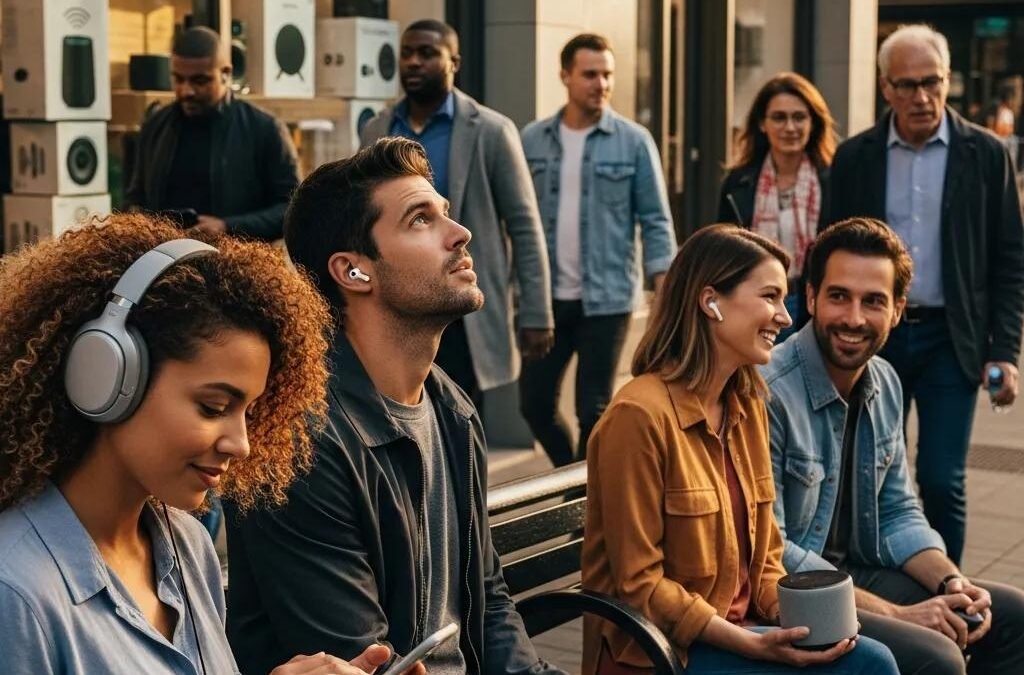
The global audio market growth is driven by converging consumer demand for on-demand audio, the spread of voice-first devices, advances in AI-enabled production, and rising spend on audio advertising. These trends combine technology adoption with changing media consumption habits to expand addressable audiences and new commercial formats. Understanding these forces helps brands identify where to place resources—whether in podcast sponsorships, sonic logos for assistants, or immersive experiential audio—and why audio-first strategies matter. The following paragraphs break these trends into focused areas businesses should monitor and act upon.
Digital audio platforms and podcasting have scaled audiences and ad spend, while streaming music services continue to monetize listener time through subscriptions and targeted ads. Smart speakers and voice assistants shifted discovery and commerce to voice-first interactions, creating demand for short, recognizable sonic cues. AI and cloud production tools are reducing the cost and time required to create high-quality audio assets, enabling rapid iteration and localization. Immersive audio and spatial sound are creating premium experiences across VR/AR and live events, which, in turn, are pushing brands to experiment with 3D audio storytelling.
This list summarizes the highest-impact trends and their immediate implications for brands.
- Podcasting and streaming growth expands inventory for branded audio assets and host-read or produced ad formats.
- Smart speakers and voice assistants increase the need for sonic logos and voice personas for voice-first discovery.
- AI in production accelerates content creation and enables dynamic, personalized experiences at scale.
- Immersive and spatial audio create premium brand experiences in virtual and live environments.
- Wireless wearables and improved audio hardware raise baseline listening quality and engagement.
Each trend suggests concrete investment areas for marketing teams and guides decision-making on priorities, which we will explore further in platform-specific subsections.
How Is Digital Audio Content Like Podcasting Shaping Market Expansion?
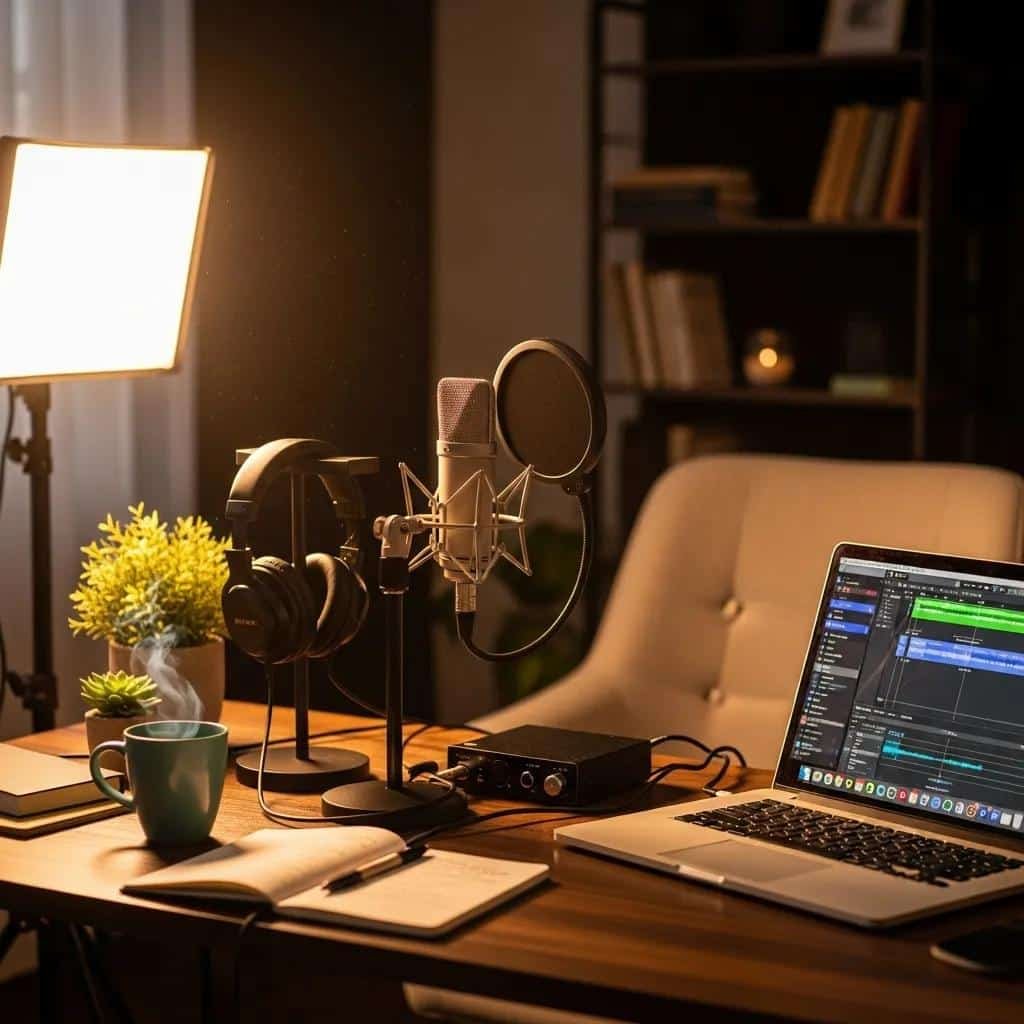
Podcasting drives market expansion by converting long-form attention into monetizable ad formats and branded content opportunities through host-read ads, produced segments, and sponsored episodes. Audience growth and listener loyalty create a reliable context for brands to deploy custom audio assets such as podcast jingles, branded intros and outros, and targeted ad creative that reinforce recall. Podcast ad spend and dynamic ad insertion capabilities enable campaign localization and measurement, making podcasts an increasingly efficient channel for discovery and direct response. Brands should invest in bespoke podcast audio when seeking deeper engagement or need to own a recurring audio touchpoint that aligns voice, music, and messaging. The following subsection addresses how voice-first devices create complementary needs.
What Role Do Smart Speakers and Voice Assistants Play in Audio Market Growth?
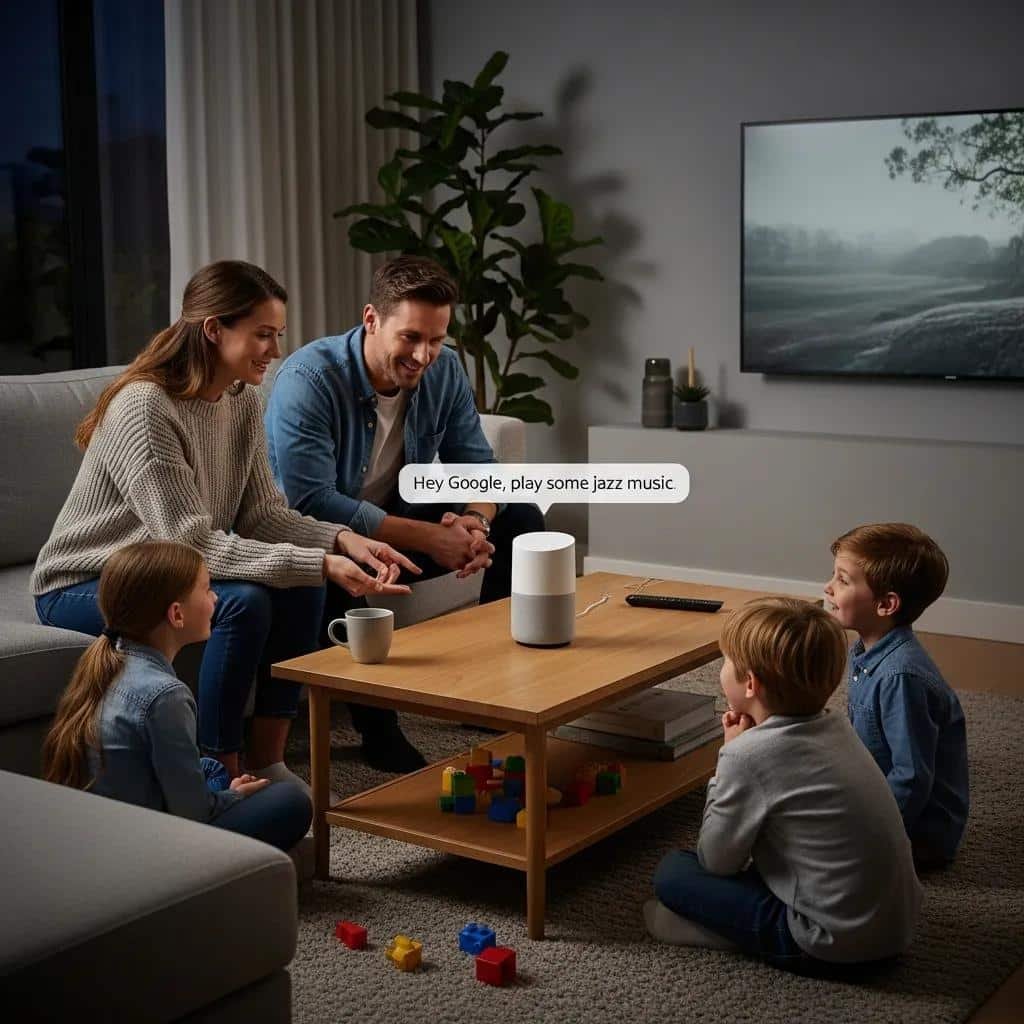
Smart speakers and voice assistants shift interaction patterns by favoring brief, recognizable audio cues and conversational voice personas over traditional visual branding, underscoring the importance of sonic logos and voice guidelines. Adoption of voice devices has increased habitual use for information, commerce, and media control, shifting some discovery to audio-only experiences where a short sonic identity can shortcut recognition. Brands that create concise audio signatures and consistent voice personas improve recall and make voice experiences feel native, which supports retention and conversion in voice-driven journeys. These device-driven branding needs naturally lead to consideration of production methods and technologies—covered in the next H2—used to create adaptable, voice-first assets.
Optimizing Audio Growth Through Sound Branding - Sound Branding Ideas
Emerging audio technologies—AI-assisted production, spatial and immersive audio, advanced DSP, and cloud-based workflows—are transforming how audio is produced, personalized, and delivered, reducing time-to-market and enabling richer listener experiences. AI accelerates editing and versioning, spatial audio enables three-dimensional sound placement for experiential branding, and cloud platforms make distributed collaboration and delivery seamless. Together, these technologies change both the cost structure and the creative possibilities for brands, and they demand new governance practices to preserve brand integrity across formats. The following subsections define the core technologies and map their business impact for practical decision-making.
AI-driven audio tools streamline production by automating tasks such as noise reduction, leveling, mixing, and initial mastering, while also enabling synthetic voice generation for rapid localization and personalization. Brands can use AI to produce multiple ad variants, local-language versions, and dynamic creatives optimized to context, reducing studio time and budgets. Limitations around voice authenticity, ethical use,e and quality control mean human oversight remains essential for brand-sensitive assets, so teams should pair AI with experienced composers and talent to maintain brand standards. The following subsection describes the role of spatial audio in creating immersive brand moments.
Immersive and spatial audio places sound in three-dimensional space to create presence and directionality that enhance narrative and emotional impact in VR/AR experiences, premium podcasts, and live events. For brands, spatial sound enables richer storytelling—placing a product sound or voice in perceived proximity to the listener to increase attention—and supports differentiated event activations and premium content monetization. Implementing spatial audio requires both creative skill and delivery planning so assets translate across headphones, smart speakers, and multichannel setups. Understanding adoption timelines and production trade-offs helps brands decide when to pilot immersive formats versus standard stereo content.
This table maps key technologies to attributes and direct brand impacts to aid investment prioritization.
Below is a concise mapping of technology capabilities to the adoption timeline and likely brand impact.
What Are the Growth Projections and Segmentation of the Global Audio Industry?
Projected growth and segmentation clarify where demand and revenue are likely to concentrate, shaping where brands allocate audio budgets across consumer devices, professional services, and advertising channels. Market segmentation typically divides the industry into Consumer Audio (headphones, smart speakers, wearables), Professional Audio (studio, live sound, broadcast), and Audio Advertising (podcast ads, streaming audio ads). Each segment has distinct growth drivers—hardware upgrades in consumer audio, event and production recovery in professional audio, and programmatic capabilities in audio advertising—that determine where brands should invest. The following subsections present numerical outlooks and interpret what those figures mean for a brand’s audio strategy.
The consumer segment continues to expand due to smart home adoption and premium headphone upgrades, while professional audio recovers and evolves with hybrid events and increased content production. Audio advertising shows a high CAGR as advertisers reallocate budgets to reach engaged listeners through podcasts and dynamically inserted streaming ads. Brands prioritizing long-term audience-building should weigh investments between owning content (podcasts, branded shows) and buying targeted ad inventory, depending on objectives and measurement goals. A compact comparison table below summarizes projected market sizes, CAGRs, and primary drivers for key segments.
The following table compares significant market segments, segments’ typical 2025-2030 projections, and primary drivers to help teams allocate budgets.
What Is the Outlook for Consumer and Professional Audio Market Segments?
Consumer audio growth will be anchored by continued spending on headphones, earbuds, and smart speakers that enhance on-the-go and at-home listening experiences, combined with subscription models for ad-free content. Brands should consider that higher-fidelity consumption enhances the effectiveness of sonic branding, and clearer audio supports subtle sonic cues and music-driven recall. Professional audio demand will hinge on event recovery, corporate media production, and the need for high-quality studio assets, which sustains a market for experienced composers, engineers, and vocal talent. For brand teams, the implication is a two-track approach: optimize mix-ready assets for streaming and deliver premium, high-fidelity content for owned channels.
How Is the Audio Advertising Market Expanding and Influencing Brand Strategies?
Audio advertising is expanding through better measurement, programmatic insertion, and growth in podcast ad spend, making audio a more measurable and scalable channel than before. New ad formats—host-read spots, produced pre-rolls, mid-rolls, and dynamically targeted streaming ads—allow brands to tailor creative for listener context, improving relevance and recall. Branded audio assets, such as jingles and sonic logos, work effectively within these formats to increase recognition across placements and episodes. As ad tech matures, brands should invest in reusable audio assets that can be adapted for multiple formats and measured against defined KPIs.
This table offers a quick EAV-style comparison of market segments, CAGR direction, and strategic priority to help marketers weigh opportunities.
Why Is Sound Branding a Strategic Imperative in the Expanding Audio Market?
Sound branding is essential because audio creates memory cues and emotional associations that visual identity alone cannot capture. In a repeatable, voice-first, audio-rich environment, sonic identity becomes a primary differentiator. Well-crafted sound elements improve brand recall, enhance ad effectiveness, and make voice interactions feel consistent with visual identity, delivering measurable impact on engagement metrics. Practical sound-branding elements include jingles, sonic logos, custom voiceover,s and podcast assets that work across formats and devices. The following subsections explain the psychology of audio recall and prescribe concrete elements and a checklist brands can follow to audit their sonic readiness.
Sound evokes memory through associative learning, where short, distinctive audio motifs trigger recognition faster than longer messages; this mechanism makes jingles and sonic logos powerful tools for recall. Emotional resonance is another mechanism: music and voice timbre influence trust and perceived personality, which can align with brand positioning to strengthen preference. For implementation, brands should select audio elements that are short, repeatable, lean, le and adaptable across channels, and ensure they can be produced and deployed at the quality demanded by modern streaming and voice platforms. The next subsection lists specific sound-branding elements and how each should be applied.
Here are practical sound-branding elements and their primary uses for voice-first and digital platforms.
- Sonic Logo: A short audio signature used at the start/end of ads and voice responses to trigger immediate recognition.
- Short Jingle: A melodic phrase for podcasts and commercials that enhances recall and advertising lift.
- Custom Voiceover: A voice persona for ads and voice assistants that conveys brand tone and consistency.
- Audio Style Guide: Rules for tempo, instrumentation, and voice usage that preserve cross-platform consistency.
- Embedded Podcast Assets: Intros, outros,s, and ad stings tailored to podcast formats for sustained listener recognition.
These elements create a modular toolkit that brands can adapt for various placements, and the following paragraph provides a checklist for sonic readiness.
This table compares common sound-branding elements, their use cases, and measurable benefits to guide prioritization.
How Does Sound Enhance Brand Recall and Customer Engagement?
Sound enhances recall by creating concise, repeatable cues that link sensory memory to brand identity, and it engages listeners by leveraging musical and vocal properties that shape emotion and attention. Studies and marketing practice indicate that melodic hooks and consistent voice timbre increase ad memorability and can boost message retention, especially in long-form audio like podcasts, where repetition and context matter. For engagement, audio assets tailored to platform context—short stings for voice devices, richer arrangements for premium podcasts—improve listener experience and encourage repeat exposure. Brands should therefore measure audio impact through both direct response metrics and longer-term brand-lift studies to capture recall and preference changes.
What Are Effective Sound Branding Elements for Voice-First and Digital Platforms?
EPracticale elements for voice-first contexts are short, clear, and optimized for low-latency playback: sonic logos under one second, concise voice prompts, and versioned assets for varying loudness and device playback characteristics. For digital platforms, multiple versions of each asset (complete song, 15-second sting, 1-second logo) ensure correct application across podcasts, ads, and voice interactions. Implementation tips include keeping melodic content simple, testing voice personas with real user groups, and creating an audio style guide to enforce consistency across channels and agencies. These practices help maintain cross-platform sonic consistency while allowingappropriate contextual personalization.
What Future Trends Will Shape the Audio Market and Sound Branding Landscape?
Future trends shaping the audio market include hyper-personalized audio experiences, governance for cross-platform sonic consistency, and evolving ethical norms around AI-generated voices and content. Personalization engines will insert context-aware audio—location, device, and listener preference—while brand governance frameworks will ensure the sonic identity remains coherent across highly variable delivery contexts. Ethical and regulatory expectations will require transparency and consent when synthetic voices are used. The following subsections present how personalization and governance will evolve and outline emerging ethical considerations for AI-driven sound design.
Personalized audio experiences will leverage listener data and dynamic insertion to tailor music, voice, and messaging to user preferences and context, improving relevance and potentially conversion rates. Maintaining sonic consistency while enabling personalization requires modular assets—atomic sonic logos, voice style tokens,s and an asset registry—that can be recombined without fragmenting brand identity. Brands should plan governance that includes version control, accessibility alternatives, and measurement strategies to monitor consistency and performance. The following subsection addresses ethical guardrails for AI in audio.
AI-driven sound design raises ethical issues around voice cloning, consent, attribution, and the authenticity of voice personas, especially as synthetic voices become indistinguishable from human talent. Brands must adopt guardrails such as documented consent forthe use of cloned voices, clear labeling of synthetic audio when appropriate, and oversight processes that include human review of emotionally sensitive content. Transparency and policies that protect consumer trust will be critical as regulations and consumer expectations tighten. To close, the article offers practical next steps and an invitation to collaborate with experienced audio partners.
Key future actions for brands to prepare:
- Create modular sonic assets that scale across personalization engines and devices.
- Develop governance rules for versioning, accessibility, and cross-platform consistency.
- Adopt ethical guidelines for AI use, including consent and labeling practices.
For brands ready to translate strategy into production, partnering with experienced audio specialists can acceleratethe creation of original, on-brand audio assets. Sound Branding Ideas provides creative services—jingles, slogans, custom voiceovers, audio commercials, phone trees, and hold music—and emphasizes original audio and lyrics, paired with deep branding understanding, to make companies more memorable. Their team of composers and vocal talent can adapt sonic identities for podcasts, voice assistants, and immersive formats while maintaining cross-platform consistency.
This final paragraph recommends immediate tactical priorities—audit existing audio assets, define a sonic style guide, and pilot a modular asset for a high-value channel—so teams can begin capturing the expanding opportunities in the audio market. The article ends here with an invitation for brands to consider professional collaboration to realize these audio strategies.
Frequently Asked Questions
What are the benefits of using AI in audio production?
AI in audio production offers numerous advantages, including faster editing, automated mixing, and the ability to generate synthetic voices for localization. These tools streamline the production process, allowing brands to create high-quality audio assets more efficiently. Additionally, AI can facilitate dynamic ad insertion, enabling brands to tailor content to specific audiences in real-time. However, while AI enhances productivity, it is crucial to maintain human oversight to ensure quality and authenticity, particularly for sensitive brand messaging.
How can brands measure the effectiveness of their audio marketing strategies?
Brands can measure the effectiveness of their audio marketing strategies using metrics such as listener engagement, ad recall, and conversion rates. Tools like A/B testing can help assess which audio elements resonate best with audiences. Additionally, tracking brand lift studies can provide insights into how audio campaigns influence consumer perception and behavior over time. By analyzing these metrics, brands can refine their audio strategies to enhance impact and optimize return on investment.
What role does personalization play in audio marketing?
Personalization in audio marketing is becoming increasingly important as it allows brands to tailor content to individual listener preferences and contexts. By leveraging data on user behavior, brands can create customized audio experiences that resonate more deeply with their audience. This can include personalized music playlists, targeted ads, or dynamic messaging that adapts based on location or device. Effective personalization not only enhances listener engagement but can also lead to higher conversion rates and brand loyalty.
How can brands ensure consistency in their audio branding across different platforms?
To ensure consistency in audio branding across various platforms, brands should develop a comprehensive audio style guide that outlines the use of sonic logos, jingles, and voice personas. This guide should include specifications for tone, tempo, and instrumentation to maintain a cohesive brand identity. Additionally, creating modular audio assets that can be adapted to different formats helps preserve brand integrity while enabling contextual personalization. Regular audits of audio content can also help identify areas for improvement and ensure adherence to brand standards.
What ethical considerations should brands keep in mind when using AI-generated audio?
When using AI-generated audio, brands must navigate several ethical considerations, including consent, transparency, and authenticity. It is essential to obtain documented permission to use cloned voices and to clearly label synthetic audio when appropriate. Brands should also establish oversight processes to review emotionally sensitive content created by AI. By prioritizing ethical practices, brands can build consumer trust and ensure compliance with evolving regulations surrounding AI and audio content.
What are the emerging trends in audio advertising that brands should watch?
Emerging trends in audio advertising include the rise of programmatic ad insertion, enabling more targeted, efficient ad placements. Additionally, podcasting’s growth continues to offer brands unique opportunities for storytelling and engagement. Brands should also pay attention to the growing demand for dynamic audio ads that can be tailored to listener context in real time. As technology evolves, staying informed about these trends will help brands optimize their audio advertising strategies for maximum impact.