

Refreshing Your Brand's Audio Identity with Sound Branding Ideas
Audio identity is the collection of sonic assets — jingles, sonic logos, voiceovers, audio palettes, and sound effects — that make a brand instantly recognizable through listening alone. It works by leveraging memory encoding and emotional association: concise melodies or distinctive voices create rapid recall and shape customers’ feelings toward a brand. This article explains how to spot worn, ineffective, or misaligned audio assets and provides practical timing guidance for audio rebrands, helping teams align sound with the current strategy. Readers will learn why audio matters in multi-platform ecosystems, five clear signs that an audio identity needs updating, how market and business changes affect timing, the measurable benefits of a strategic refresh, and a step-by-step audit and rollout checklist. Throughout, you’ll find checklists, EAV tables that compare old vs refreshed states, and concrete steps you can use today to evaluate jingles, sonic logos, and voiceovers. Keywords such as audio rebrand timing, sound identity update, when to change jingle, and audio branding audit are integrated to help practitioners and decision-makers recognize indicators and decide on next steps.
Why Does Your Company’s Audio Identity Matter More Than Ever?
Your audio identity matters because sound encodes brand cues rapidly and evokes emotion across contexts where visual attention is limited. Listeners process audio signals quickly, often before visual recognition completes, making a sonic logo or jingle an efficient marker for brand recall. In practical terms, a well-crafted brand voice or sonic motif increases recognition on platforms such as streaming ads, podcasts, and voice assistants, turning brief exposures into stronger memory traces. The following section examines the neurological and emotional mechanisms that explain why sound drives recognition and long-term attachment.
How Does Sound Influence Brand Recognition and Emotional Connection?
Sound influences recognition by engaging auditory memory pathways and emotional centers, thereby strengthening associative links between melody, voicetone, and brand meaning. Auditory patterns are encoded differently from visual ones; the repetition of a short motif or a distinctive voice creates automatic retrieval cues, increasing aided and unaided recall. Emotional connection forms when melody, tempo, and vocal delivery align with a brand’s personality, making customers more likely to choose a familiar-sounding brand in noisy decision environments. Recent research shows that consistent sonic motifs across touchpoints boost recall metrics, making recall and emotional valence measurement an essential part of an audio identity review.
What Role Do Jingles, Sonic Logos, and Voiceovers Play in Audio Identity?
Jingles, sonic logos, and voiceovers each serve a distinct role: jingles build narrative and lyrical hooks for campaigns, sonic logos act as micro-identifiers for instant recognition, and voiceovers convey tone and clarity across long-form and short-form content. Jingles often anchor advertising campaigns with lyrical cues that support messaging, while sonic logos deliver quick brand identification in under a second. Voiceovers establish the brand voice—authoritative, friendly, or quirky—across customer service, on-hold experiences, and product tutorials. Deciding which asset to prioritize depends on platform constraints and the communication goal; the next section outlines signs that indicate these assets may be outdated or misaligned.
What Are the Top Signs Your Company’s Audio Identity Is Outdated or Misaligned?
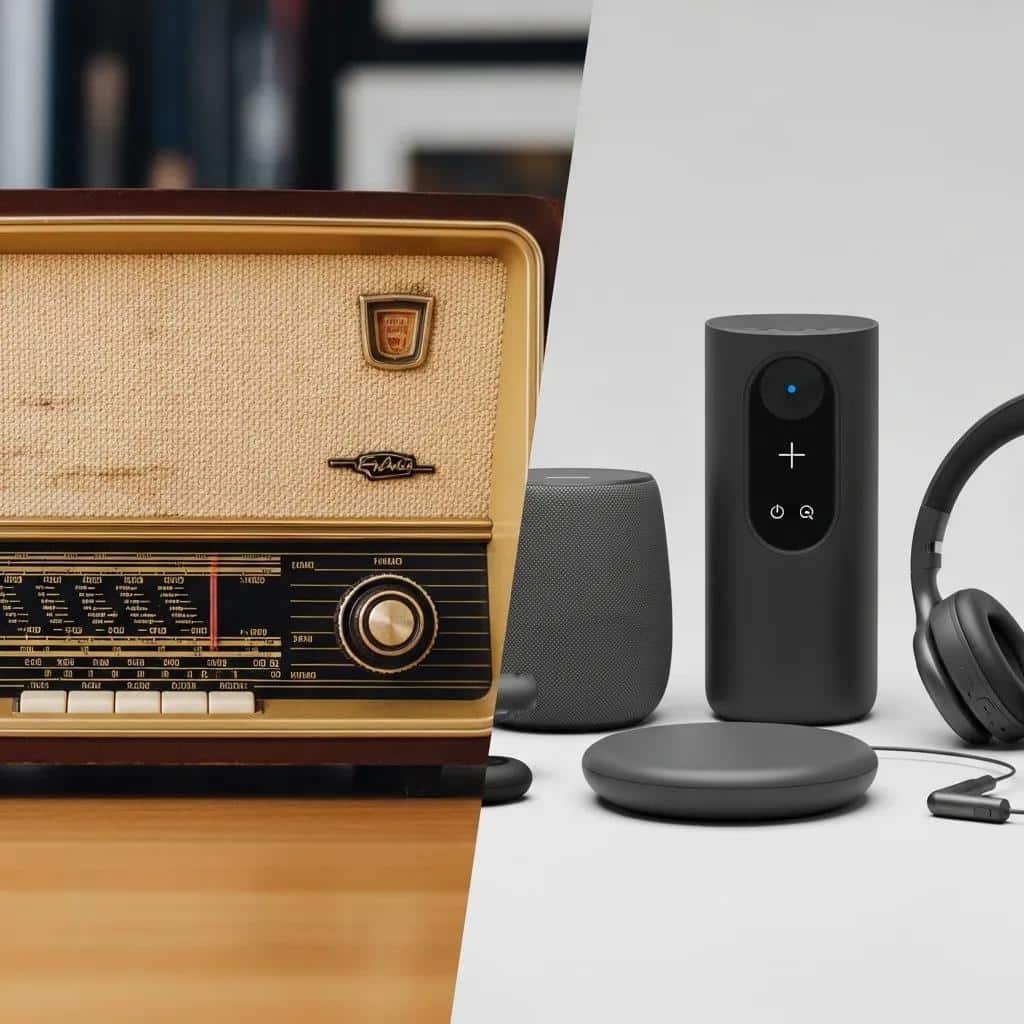
An outdated audio identity reveals itself through measurable performance decline and poor fit with current brand strategy and audience tastes. Look for signs such as reduced ad recall, negative listener feedback, jingle fatigue, production styles that sound period-specific, and inconsistent voice casting across touchpoints. Below is a concise list of five clear indicators that a rebrand is due.
- Decreasing recall in audio ads or surveys, indicating the motif no longer sticks.
- Audience feedback describing the sound as “ddat, suggesting a mismatch on connect one to another
- Platform mismatch: assets don’t scale to smart speakers, short-form, or voice AI, reducing reach.
- Stylistic cues tied to an old era (production techniques, instrumentation), causing perceptual age mismatch.
- Business repositioning or new audience targets that the audio no longer serves, creating strategic misalignment.
This list isolates the most actionable flags to watch for, and the following table breaks down common audio elements with attributes that differentiate an outdated state from a refreshed state.
Sound Branding Ideas can assist teams in diagnosing these symptoms and performing a focused audio audit to identify which assets need a light relift versus a complete redesign. Their services include jingle creation, slogan writing, and custom voiceovers, and are structured to help brands move from diagnosis to deliverables without placing heavy strain on internal resources. After diagnosis, the following subsections explain practical tests for jingles and criteria for when a sonic logo needs updating.
How Can You Identify an Outdated Jingle or Audio Branding Element?
Assess a jingle by testing five practical attributes: age of composition, lyrical relevance, instrumentation, production quality, and platform fit. Start with recall surveys and A/B tests to measure aided/unaided recall and sentiment, then analyze lyrics for references that no longer reflect the brand promise or current offers. Listen for production markers—taped reverb, dated synth textures, or mixing choices—that anchor a jingle to a past era and diminish its perceived relevance. Combine quantitative evidence (recall drops, low engagement) with qualitative listener feedback to prioritize remediation. If tests reveal low recall or negative sentiment, options include a subtle arrangement update or a complete composition replacement, depending on strategic goals.
When Does Your Sonic Logo Need Updating to Reflect Brand Evolution?
A sonic logo needs updating when its tonal palette, tempo, or instrumentation no longer matches a brand’s current personality, positioning, or audience expectations. Triggers include repositioning to a premium or youthful audience, expansion to new markets with different sonic associations, or simplifying brand architecture after a merger. Decide between a relift—minor melodic or production tweaks to modernize—or a redesign that creates an entirely new motif when brand architecture or promises change dramatically. A phased approach often works best: prototype new motifs in digital ads, measure recall and sentiment, then roll out the winning variant across touchpoints.
This mapping links specific market triggers to recommended audio actions so teams can plan the scope and urgency of a rebrand. The next H2 examines market and technology shifts in more depth.
How Do Market Trends and Business Changes Signal the Need for an Audio Rebrand?
Market and technological changes alter how audio is consumed and what constitutes an effective audio identity, making periodic re-evaluation essential. Emerging formats like short-form social audio, smart speakers, and voice AI demand variants of sonic assets—shorter motifs, stem mixes, and TTS-friendly voice profiles—that ensure consistent recognition across channels. Business changes, such as mergers, repositioning, or launching new product lines, also require remapped audio to reflect new promises and architectures. Below, specific technology and business drivers are linked to recommended actions so decision-makers can judge timing and effort.
What Impact Do Emerging Technologies Like Voice AI Have on Audio Identity?
Voice AI creates both constraints and opportunities for brand sound: it enables personalization and dynamic delivery while raising concerns about consistency and legal issues related to voice cloning and TTS use. Brands must decide whether to license bespoke voice assets or design neutral, brand-safe voice profiles that work reliably with speech synthesis engines. Voice AI also favors modular audio assets—stems, short motifs, and metadata-tagged files—that enable dynamic assembly without sacrificing brand identity. Planning for voice AI means producing rights-cleared, neutral voice files and designing motifs short enough to trigger recognition in voice-driven interactions.
When Should Business Model Changes or Mergers Trigger Audio Rebranding?
Business model shifts and mergers should trigger audio rebranding when the brand promise, target audience, or architecture changes materially. For mergers, immediate alignment on a sonic architecture is necessary to avoid mixed signals; a staged approach—temporary hybrid assets followed by a unified sonic logo—reduces customer confusion. New product lines aimed at distinct demographics may need tailored audio palettes or voice casting to maintain resonance. Prioritize immediate fixes (on-hold music, key ad assets) during transition and plan a phased rollout for broader assets, using pilot tests to validate choices.
This table connects market triggers to concrete audio rebrand responses so teams can act with appropriate speed and scope. The following H2 outlines the benefits of investing in a strategic audio refresh.
What Are the Benefits of a Strategic Corporate Audio Rebrand?

A strategic audio rebrand delivers more explicit brand recall, stronger emotional engagement, and better differentiation in crowded markets. When audio assets are updated to align with current positioning, memory encoding improves, and customersforme quicker associations between sound cues and product promises. This leads to measurable uplifts in aided/unaided recall, better performance from audio ads, and greater cross-platform consistency, reducing cognitive friction for consumers. The sections below detail how refreshing sound enhances recall and how audio rebranding can separate a company from competitors.
How Does Refreshing Your Audio Identity Enhance Brand Recall and Customer Engagement?
Refreshing audio identity enhances recall by optimizing encoding cues—short motifs, repeated lyrical hooks, and consistent voice casting—that streamline memory retrieval. Measurement approaches include aided/unaided recall surveys, in-ad listener tests, and engagement metrics on audio platforms; these provide evidence of improvements post-refresh. A refined audio palette that aligns with contemporary production standards also increases shareability on social platforms, which raises organic reach and engagement. Implementing controlled A/B tests before and after a refresh gives teams quantitative evidence of engagement gains and informs wider rollout decisions.
In What Ways Can Audio Rebranding Differentiate Your Business in the Market?
Audio rebranding differentiates by creating unique sonic motifs, tailored voice casting, and signature production styles that competitors lack. Distinctive instrumentation choices, lyric strategies, or voice timbres become differentiators when applied consistently across ads, apps, on-hold systems, and smart speaker interactions. Differentiation strategies include building an audio toolkit with primary motifs, secondary motifs, and platform-specific stems to maintain cohesion while enabling local or campaign-level variation. When differentiation is intentional, sound becomes a defensible brand asset that supports pricing, loyalty, and recognition.
- Signature Motifs: Create short, repeatable motifs that trigger instant recall.
- Voice Casting: Choose a consistent voice style that embodies the brand personality.
- Production Style: Use a curated audio palette to make campaigns instantly recognizable.
These tactical approaches help brands use sound deliberately rather than reactively, which leads to the how-to audit and refresh process in the next section.
How Can You Effectively Audit and Refresh Your Company’s Audio Identity?
An effective audio identity audit follows a transparent, staged process: inventory, assessment, testing, development, and rollout. The audit measures each asset against recall, platform fit, and brand alignment metrics, then prioritizes fixes based on strategic impact and technical ease of implementation. This section provides a step-by-step checklist and a sample EAV table to guide an actionable audit that teams can use internally or share with external partners.
What Steps Are Involved in Conducting an Audio Branding Audit?
Conducting an audio branding audit requires these core steps: create a comprehensive inventory of all audio assets and their contexts; collect performance evidence such as recall scores, streaming/ad metrics and customer feedback; interview stakeholders to align on brand goals and constraints; evaluate legal usage rights and platform compatibility; and finally, score each asset for “keep, relift, replace” to prioritize work. Measurement items should include aided/unaided recall, engagement rates for audio placements, and platform mismatch flags for smart speakers or short-form audio. Use the table below to translate audit findings into recommended fixes.
This checklist provides a direct mapping from data to action so teams can move from assessment to prioritized deliverables. The practical steps below outline how professional services like custom jingles and voiceovers fit into this workflow.
How Do Custom Jingle Creation and Voiceover Services Support Audio Rebranding?
Custom jingle creation and professional voiceover services operationalize audit findings by delivering rights-cleared, platform-ready assets: briefs, compositions, recorded stems, mixed masters, and variants sized for short-form, long-form, and voice AI contexts. Production stages typically include a discovery brief, concept demos, composition and lyric writing, casting and recording, mixing/mastering, and delivery of stems and length variants. Working with experienced providers ensures originality and legal clarity; Sound Branding Ideas emphasizes 100% original audio and lyrics, offers jingle creation, slogan writing, and custom voiceovers, and brings decades of industry know-how to streamline production and ensure assets work across platforms. Deliverables should include stems, multiple length variants, and clear usage rights to support global and channel-specific rollouts.
- Deliverables include: stems, 1–3 second motifs, 15–30 second ad cuts, full-length jingle masters, and voiceover packs.
- Process stages: brief → demo concepts → recording → mixing/mastering → multi-format delivery.
- Rights and usage: confirm exclusive ownership of original audio and lyrics for campaign flexibility.
These services convert audit priorities into tangible assets ready for deployment, and the final list below provides a concise rollout checklist and an actionable call to action for teams prepared to start.
- Inventory all audio assets and contexts: Gather every jingle, motif, and voice file and note where each is used.
- Measure performance: Run recall surveys, collect streaming and ad metrics, and gather qualitative feedback.
- Prioritize fixes: Use “keep, relift, replace” scoring to budget effort and sequencing.
- Develop assets: Commission jingles, refine sonic logos, and create voice kits with stems and variants.
- Pilot and measure: A/B-test updated assets in targeted channels before a full rollout.
An actionable next step is to schedule an audio identity audit and consultation that uses this checklist, produces prioritized deliverables, and results in platform-ready files. Sound Branding Ideas offers focused audit support and production services that translate assessment into original jingles, slogans, and custom voiceovers—helping teams move from diagnosis to a phased, measurable rollout without overloading internal resources.
This final table ties audit KPIs to remediation actions and underscores the practical outputs teams should expect from an audit-to-production workflow.