
What is Audio Branding? A Complete Definition for Marketers
Audio branding is the strategic use of sound to reinforce and express a brand’s identity, creating recognition and emotional connection across customer touchpoints. This guide explains what audio branding (also called sonic branding or sound branding) means for marketers, how it works, and why it deserves a clearly defined place in modern brand strategy. Many brands struggle to translate visual identity into consistent audible cues; audio branding solves that gap by mapping melody, timbre, rhythm, and voice to brand personality and business outcomes. Readers will learn a concise definition, the core creative elements (sound logos, jingles, voice-overs, brand music), evidence-based benefits, an actionable step-by-step strategy, illustrative examples, and the most important emerging trends in voice search and smart speakers. Throughout the article, we will use terms such as sonic identity, audio identity, and audio touchpoints to connect practical guidance with the semantic keywords marketers use in audio branding research.
What is Audio Branding? Understanding Sonic and Sound Branding Explained
Audio branding is a deliberate identity system that uses sound to signal a brand’s personality, improve recognition, and shape emotional response. The mechanism behind audio branding is simple: consistent sonic motifs create memory hooks that trigger brand associations, and when those motifs are repeated across audio touchpoints, they accelerate recall and preference. For marketers, audio branding functions as a sensory extension of brand identity, translating color and visual tone into melody, harmony, voice, and production style. The following bullets summarize the most essential attributes that define audio branding and how it intersects with broader brand work.
- Audio branding is strategic: it aligns with brand values and positioning.
- Audio branding is consistent: repeated motifs and guidelines ensure recognition.
- Audio branding is touchpoint-based: it spans ads, apps, stores, and voice platforms.
- Audio branding is measurable: recall and emotional metrics can track impact.
These attributes lead directly to the nuanced vocabulary marketers use to describe sound work, so the following subsection clarifies similar terms and their practical differences.
How do audio branding, sonic branding, and sound branding differ?
Audio branding, sonic branding, and sound branding are often used interchangeably, but subtle differences help in practice. Audio branding is the broadest term, referring to the entire strategy that maps sound to brand identity; sonic branding is commonly used by specialists emphasizing the crafted musical elements of identity; sound branding sometimes emphasizes functional sounds like UI and product audio within a branding system. For example, a short melody used at the end of a TV spot is a sonic logo (sonic branding), whereas the chime a device makes when it powers on is product sound (sound branding). Practitioners choose terms based on project scope and stakeholder preferences, but they all share the same goal: a coherent, audible identity that supports recognition and emotional connection.
What are the core components of audio branding?
Audio branding comprises several core elements that work together to form a sonic identity: sound logos, jingles, brand music, voice-overs, soundscapes, and UI/product sounds. Each component plays a role depending on the audience, channel, and desired emotional effect. Sound logos are compact melodic signatures; jingles add lyrics and narrative; brand music provides extended emotional scaffolding; voice-overs deliver personality and clarity; soundscapes create immersive environments for physical or digital spaces; UI sounds ensure utility and consistent interaction feedback. Understanding these components helps marketers prioritize which assets to commission and where to apply governance.
What Are the Essential Elements of Audio Branding? Jingles, Sound Logos, and Voice-overs
A successful audio identity combines short-form identifiers with longer musical assets and human delivery to span both recognition and emotional engagement. The mechanism is complementary: sound logos create instant recognition, jingles and brand music build narrative and mood, and voice-overs carry brand personality in spoken form. For creative planning, consider the production scope (composition, lyrics, arrangement), technical formats (stems, master files, platform-ready formats), and governance (usage and adaptation guidelines).
Introductory comparison of core audio assets and their primary attributes:
This comparison clarifies which assets to prioritize based on campaign goals and touchpoint requirements. After selecting the right mix of assets, production decisions, and governance guidelines, determine consistency and long-term utility.
Below are practical lists to help teams choose elements and production priorities when planning a sonic identity.
- Key creative elements include sound logos, jingles, brand music, and voice-overs.
- Production priorities include original composition, multi-format masters, and voice casting.
- Governance priorities include usage rules, adaptation permissions, and testing protocols.
These lists lead into how specific elements create recognition and emotional resonance, which the following subsection explores.
How do sound logos and jingles create brand recognition?
Sound logos and jingles create recognition through repetition, distinctive melodic intervals, and concise rhythmic hooks that the brain encodes as associative memory. The mechanism combines short-term auditory salience with long-term associative learning. When a motif consistently precedes or follows branded experiences, listeners form a predictive link between the motif and the brand. Practical tips include keeping sound logos under five seconds, using intervallic leaps or rhythmically distinctive patterns, and testing variations in field and lab settings to measure recall. Designing for recall also means producing multiple renderings (high- and low-fidelity, instrumental/voice) so the motif survives platform constraints and remains recognizable.
- Keep sound logos concise and rhythmically distinct.
- Use melodic intervals that are easy to hum and reproduce.
- Test for recognition across contexts (video, mobile, voice assistants).
These recommendations emphasize the importance of voice and musical arrangement in forging emotional bonds, a point the following subsection addresses.
What role do voice-overs and brand music play in emotional connection?
Voice-overs and brand music translate brand personality into human and musical terms that guide emotional interpretation and behavioral response. Timbre, tempo, harmonic choices, and vocal delivery combine to signal warmth, authority, playfulness, or sophistication—affecting trust and purchase intent. Voice casting should align with brand archetype and audience expectations, while musical arrangements should support narrative pacing and cultural relevance. Testing via focus groups and A/B experiments helps validate whether the chosen voice and music reliably evoke the intended emotion and reinforce the sonic identity.
- Choose voice qualities that align with the brand persona and audience demographics.
- Use music to set pacing and narrative arc for campaign storytelling.
- Employ A/B testing and qualitative feedback to validate emotional impact.
Why Does Audio Branding Matter? Key Benefits for Marketers and Brands
Audio branding matters because sound increases recognition, enhances recall, and deepens emotional connection—outcomes that translate into measurable business benefits. The mechanism is cognitive: auditory cues trigger associative memory and emotional circuits, making messages more memorable than purely visual counterparts in many contexts. For marketers, this means audio branding can lift recall, boost ad effectiveness, and create consistent cross-channel experiences that deepen loyalty. The table below maps audio branding elements to measurable benefits, enabling marketing teams to prioritize investments and expected outcomes.
This mapping helps teams link sonic deliverables to KPIs and design experiments to measure ROI, such as pre/post recall tests and controlled ad experiments. The following subsection provides concrete mechanisms and metrics for recognition and loyalty.
How does audio branding boost brand recognition and recall?
Audio branding boosts recognition and recall by creating reliable auditory cues that audience members learn to associate with a brand, thereby speeding mental retrieval during decision-making. Empirical approaches include controlled lift studies, aided and unaided recall surveys, and neuroscience-informed measures (e.g., biometric responses) to quantify effect sizes. Practically, marketers can run short ad rotations with and without the sound logo to measure incremental recall and attribute shifts. Measuring recognition also requires consistent tagging rules so the same motif is present across channels, ensuring the cue remains diagnostic for the brand rather than diluted.
- Use pre- and post-exposure surveys to measure recall lift.
- Implement controlled A/B ad tests to isolate sound effects.
- Track engagement metrics alongside recall for holistic measurement.
These measurement practices naturally point to loyalty and emotional outcomes that audio branding can influence, which the following subsection examines.
In what ways does audio branding forge emotional connections and loyalty?
Audio branding forges emotional connections through repeated, emotionally congruent cues that become part of a listener’s habitual experience with a brand, thereby supporting loyalty and repeat behaviors. The psychological basis includes associative conditioning and the emotional power of musical structure: consistent melodies paired with positive experiences increase preference over time. Metrics to track loyalty effects include NPS changes, retention rates after campaign exposure, and longitudinal studies correlating sound exposure with repeat purchase. Brands should combine short-term experiments with long-term cohort analysis to capture both immediate and enduring loyalty shifts.
- Track NPS and retention before and after major sonic rollouts.
- Use cohort analysis to link sound exposure with repeat behavior.
- Combine qualitative research with quantitative metrics to interpret emotional impact.
How to Create an Audio Branding Strategy: Step-by-Step Guide for Marketers
A disciplined audio branding strategy follows research, creative brief, design, production, integration, testing, and governance—each step delivering specific assets and ownership. The mechanism is iterative: research informs creative decisions, prototypes are tested, production yields final masters, and governance ensures consistent use across touchpoints.
Follow these numbered steps to create a deployable audio identity:
- Conduct an audio brand audit: inventory all current audio touchpoints and gaps.
- Define sonic positioning: articulate personality, emotional goals, and usage contexts.
- Develop a creative brief: specify musical directions, voice requirements, and deliverables.
- Produce assets: compose sound logos, write jingles, record voice-overs, and create stems.
- Integrate and test: deploy across channels, run A/B tests, and refine based on data.
- Establish governance: publish audio guidelines and file standards for consistency.
This sequence leads to a clear implementation table outlining who owns each deliverable and what to expect at each phase.
These practical steps and assignments help operationalize sonic identity. In the production and integration phases, brands often partner with specialist providers; for example, Sound Branding Ideas emphasizes original audio and custom voice-over production to demonstrate the design and testing phases. Their approach emphasizes 100% original audio and lyrics, custom voice-overs, and rebranding assistance to ensure assets align with brand strategy. The following subsection explains detailed creative steps for designing a distinctive sonic identity.
What are the key steps to designing a distinctive sonic identity?
Designing a distinctive sonic identity begins with a thorough audit and audience research to identify audible gaps and emotional goals. Creative conception follows: write a brief that captures the brand archetype, the desired emotional palette, and the usage contexts for each asset. Composition and voice casting produce prototypes that are evaluated with target audiences and adjusted through iterative feedback. Final production delivers multi-format masters and stems plus integration assets for platforms such as streaming, broadcast, mobile apps, and voice assistants. Deliverables should include clear timelines, testing plans, and version control to maintain consistency as the team scales.
- Start with audience research and an audio touchpoint inventory.
- Create prototype variations and test with representative users.
- Deliver platform-ready masters and documented usage rules.
These production and testing steps flow into the integration requirements for touchpoints, which are covered in the following subsection.
How can brands integrate audio branding across all customer touchpoints?
Integrating audio branding across touchpoints requires a touchpoint matrix that maps assets, file formats, and governance to each channel—ads, websites, mobile apps, in-store, on-hold, and voice assistants. Best practice is to provide adaptable stems (music separated into layers) and multiple fidelity versions so the same motif works across high-fidelity broadcast and limited-codec voice platforms. Governance documents should include rules for adaptation, example use cases, and technical specifications such as recommended sample rates and mono/stereo variants. Testing on target devices and platforms ensures the sonic identity survives real-world constraints and preserves recognition.
- Create a touchpoint matrix listing the required assets for each channel.
- Supply stems and low- and high-fidelity variations for platform constraints.
- Maintain an audio guidelines document for consistent implementation.
What Are Examples of Successful Audio Branding? Case Studies and Industry Insights
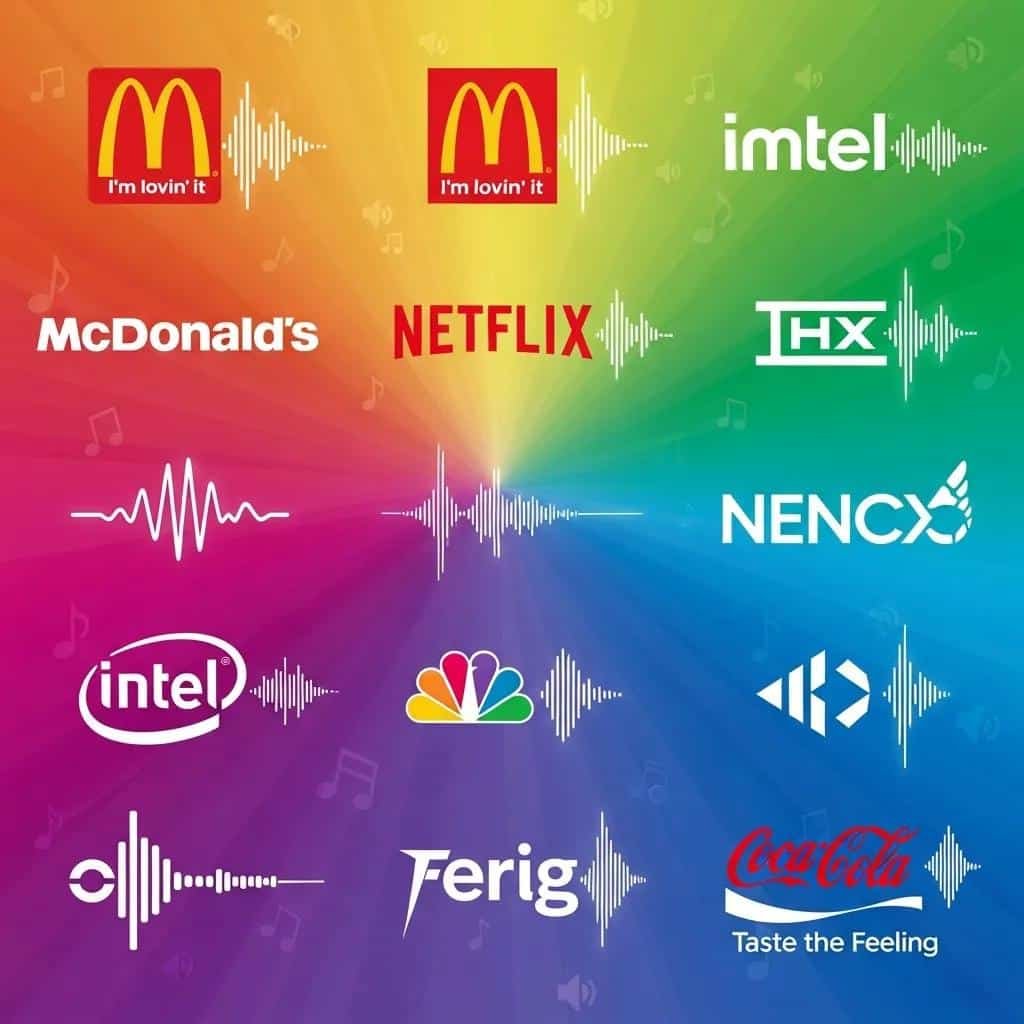
Examining successful examples clarifies design choices and measurable effects: iconic sound logos and jingles show how structural musical choices become brand shorthand. In these cases, the mechanism usually pairs a distinctive melodic motif with frequent cross-channel use, turning it into a retrieval cue at purchase moments. Below is a short list of widely recognized approaches and the structural reasons they work, followed by a discussion of practical outcomes and an anonymized firm example that reflects common industry results.
- Iconic examples use short, easily hummable melodic hooks.
- Successful jingles pair memorable lyrics with simple chord patterns.
- Branded voice personas maintain consistent timbre and delivery across media.
These examples demonstrate how audio strategies translate into recognition and loyalty for brands.
Which brands have iconic sound logos and jingles?
Several well-known brands use brief melodic signatures or jingles that have become cultural shorthand, often employing narrow melodic intervals, clean rhythms, and repeated lyrical hooks. The musical structure—choice of interval, tempo, and instrumentation—determines memorability: simple diatonic progressions and syncopated rhythms are easier to internalize. Marketers can learn from these examples by deconstructing motifs into melodic contour, rhythm, and timbre, then testing simplified prototypes to ensure cross-context recognition. The key lesson is that simplicity and repetition, combined with wide distribution, create enduring recognition.
How have audio branding strategies impacted brand recognition and loyalty?
Audio branding strategies impact recognition and loyalty by producing measurable lifts in recall, ad effectiveness, and emotional attachment when consistently deployed. Typical measurement approaches include controlled experiments that compare ad variants, longitudinal tracking of brand metrics like NPS, and click-through or conversion lifts in campaigns that leverage sonic assets. Firms that invest in governance and iterative testing report better long-term performance because consistent cues support habit formation and preference. An industry example: Sound Branding Ideas, founded by Cary Reich, provides jingle creation, slogan writing, and custom voice-overs, with an emphasis on 100 percent original audio and lyrics. Their approach highlights how original composition and strategic rebranding assistance can support measurable brand outcomes.
How is Audio Branding Evolving? Trends in Voice Search and Smart Speaker Integration
Audio branding is evolving as voice search, smart speakers, and conversational AI create new touchpoints and technical constraints that shape creative choices. The mechanism is twofold: discoverability in voice interfaces requires semantic and persona design, while smart speaker platforms demand short, recognizable assets that can be triggered or referenced by voice queries. Marketers must therefore design flexible assets, include branded utterances, and consider technical formats and privacy implications. The following subsection outlines considerations for voice search and technical recommendations for branded audio.
What is the role of audio branding in voice search optimization?
In voice search optimization, audio branding supports discoverability by providing consistent branded utterances and persona cues that help users identify and prefer a brand’s voice in conversational interfaces. Practical tactics include designing branded invocation phrases, preparing concise audible descriptors for skills or actions, and optimizing metadata and speech-friendly scripts so voice platforms can surface branded content. Technical considerations include speech synthesis compatibility, concise phrasing for wake words, and testing on popular assistant platforms to ensure the persona performs as intended. This focus on voice discoverability is essential as voice interactions increase.
How are smart speakers and conversational AI shaping audio branding strategies?
Smart speakers and conversational AI are reshaping audio branding by prioritizing short, adaptive assets, ethical persona design, and rigorous testing across APIs and device models. Creative constraints encourage brands to develop modular sonic kits—sound logos, short musical cues, and voice personas—that dynamically adapt to the flow of conversation and user context. Ethical considerations include transparency, consent, and avoiding deceptive mimicry when designing branded voices. Testing should include live-device trials, latency checks, and monitoring for unintended associations; the final design must balance brand distinctiveness with platform constraints.
Sound Branding Ideas’ focus on custom audio solutions, original lyrics, and voice-over production aligns with these trends by emphasizing original, platform-ready assets and rebranding assistance that prepares brands for voice-first environments. Their positioning reinforces the importance of original composition and careful voice persona work when integrating audio into modern conversational ecosystems.